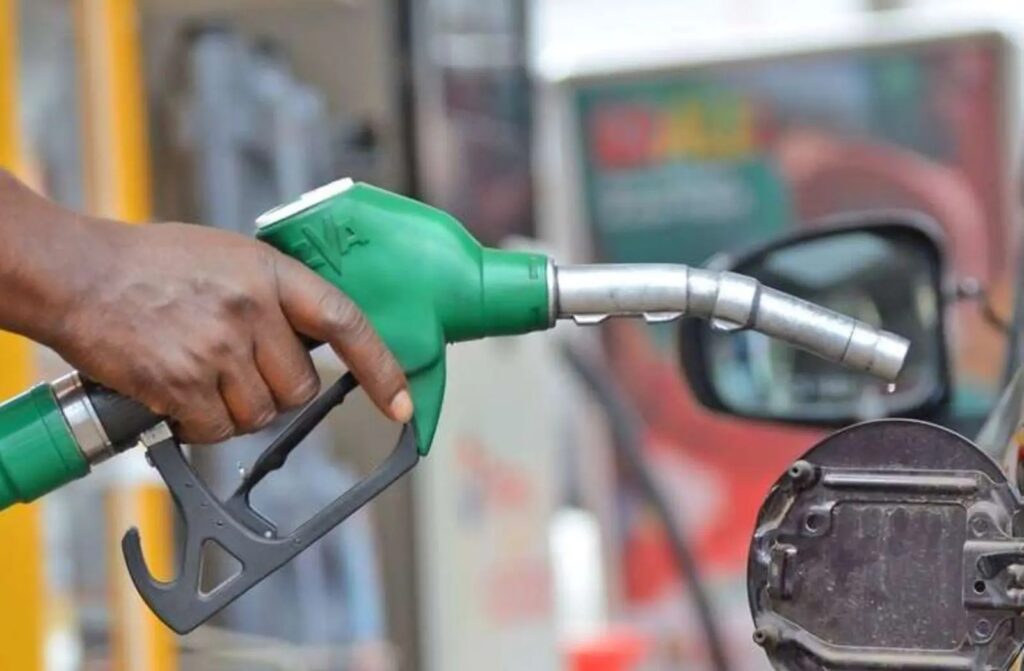
The Namibian government will absorb N$47.2 million in fuel under-recoveries to keep fuel prices unchanged in June despite continued volatility in global oil markets and mounting regional pricing pressures.
Minister of Industries, Mines and Energy, Modestus Amutse, announced that fuel prices will remain unchanged, with the National Energy Fund stepping in to shield consumers from further increases at the pump.
Fuel prices in Walvis Bay will remain at N$23.48 per litre for petrol, N$28.26 per litre for diesel 50ppm and N$28.36 per litre for diesel 10ppm.
The decision comes just one month after motorists were hit by one of the steepest fuel price increases in recent years, with petrol rising by N$1.40 per litre and both grades of diesel increasing by N$4.63 per litre.
Amutse said government had opted to absorb the latest under-recovery despite persistent pressure from international oil prices, exchange rate fluctuations and supply chain costs.
“The government is estimated to absorb the petrol under-recovery amounting to N$47.2 million in June,” he said.
Government data shows that Namibia’s fuel prices remain below those of several regional peers, including South Africa, Zimbabwe and Lesotho, largely due to continued state intervention aimed at cushioning consumers from global energy shocks.
Amutse said the government continues to use the National Energy Fund to limit the full pass-through of international fuel costs to motorists during periods of market instability.
He noted that fuel price formation remains heavily influenced by factors outside government control, including international crude oil prices, shipping and insurance costs, and movements in the Namibia dollar against the US dollar.
The minister also sought to reassure consumers over fuel availability.
“The ministry reassures the public that Namibia has sufficient fuel stocks. The national fuel supply system remains stable,” he said.
Amutse said government remains engaged with fuel suppliers and international partners to secure more favourable procurement arrangements that could help lower import costs.
He added that discussions with industry players on pricing structures are continuing as government seeks to balance affordability with supply security.
While Namibia remains exposed to geopolitical tensions and disruptions in global energy markets, Amutse said the country has maintained fuel supply continuity and will continue monitoring international developments closely.
The ministry indicated that future fuel price adjustments will depend largely on movements in global crude oil prices and exchange rates, with government prepared to consider further interventions should market conditions deteriorate.