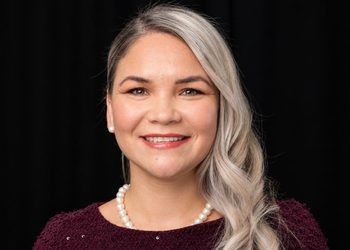
By Natasja Beyleveld
The real problem isn’t education — it’s alignment
Namibia has done something powerful: we’ve made education accessible — from primary school all the way to university. But now we’re facing a hard truth. The issue isn’t that people aren’t educated. It’s that what we’re producing doesn’t match what the economy needs.
We’re entering what’s called “credential inflation.” Degrees are becoming more common — but not more valuable. In many cases, you now need a degree just to compete for jobs that didn’t require one before. That’s not progress — that’s pressure.
At the same time, while the country is pushing toward becoming an energy powerhouse (green hydrogen, oil & gas), our institutions are still producing large numbers of graduates in general fields like administration and social sciences, instead of technical and high-demand skills. And so, many young Namibians find themselves stuck — educated, but unemployed.
Or worse, underemployed. This is where the concept of NEET (Not in Education, Employment, or Training) becomes real. It tells us that knowledge alone isn’t enough. We need experience, practical skills, and systems like Work-Integrated Learning (WIL) — where learning meets doing.
One story holds truth: the numbers don’t lie. Let’s be honest about the math.
With youth unemployment sitting at around 44.4%, the odds are tough. If 10,000 graduates enter the market each year, but only about 2,000 formal jobs are created, that means only about 20% stand a chance of finding work in their field. The rest? They must adapt — or wait.
Now add entrepreneurship into the picture.
• About 97% of SMEs in Namibia are considered “non-bankable”
• Over 90% of SMEs fail within their first five years
That means if you start a business, statistically, you’re likely to fail — more than once. In fact, if your success rate is 10%, you should expect to fail 9 times before you succeed once. But here’s the problem: most Namibians cannot afford to fail nine times. There’s no safety net, no “failure capital.”
Zoom out, and you see a bigger issue:
Across Sub-Saharan Africa, there’s a $331 billion SME financing gap. In Namibia, this shows up as a “missing middle” — lots of small hustles, a few big corporates, but very few mid-sized businesses that create jobs at scale.
So where do we go from here?
We need to shift the mindset — from job seeking to value creating. We need to specialise where the future is going. Not all degrees are equal in today’s economy. We need to lean into renewable energy (especially green hydrogen), data and AI, and sustainable agriculture. These are not trends— they’re the future.
Additionally: think beyond Namibia’s borders. The internet has removed limits. If the local market is not hiring, the global market is. Platforms like Upwork, Fiverr, and Toptal allow Namibians to sell skills internationally. You don’t need to relocate — just connect.
Let’s bring back the power of trades. We’ve overlooked something important. Skills like plumbing, electrical work, mechanics — these are not fallback options. They are high-demand, income- generating careers. In many cases, apprenticeships outperform degrees when it comes to actual employment.
So: start small, fail smart? Too many people think business must start big. But the smarter approach is 1) Test small, 2) Spend less, and 3) Learn fast . Don’t build the full restaurant — start with a food stall. That way, if things don’t work, the loss is manageable.
In Namibia, the financial industry has moved beyond traditional “charity” toward Shared Value Creation. Corporate Social Investment (CSI) is now strategically aligned with national goals like Vision 2030 and the Harambee Prosperity Plan, with a primary focus on financial inclusion and literacy. The aim: to fix real business problems such as money management. The biggest reason SMEs fail in Namibia isn’t ideas — it’s poor financial management of the cash flow, bookkeeping, and tax compliance. These skills can be more valuable than a business degree on its own.
Lastly, stop building alone. The era of the “solo hustler” is limited. We need: partnerships, cooperatives, and shared resources. Working together increases credibility, reduces risk, and improves access to funding. Namibia doesn’t have an education problem — it has a relevance problem. Degrees alone won’t build the future. Skills, adaptability, and value will. If the system is shifting, we must shift with it. The future of Namibia won’t be found — it will be built.
Data Sources: Bank of Namibia Economic Outlook (March 2026), Namibia Labour Force Report (2025), NBC Digital News (SME Statistics 2026).
* Natasja Beyleveld is the MD of NaMedia