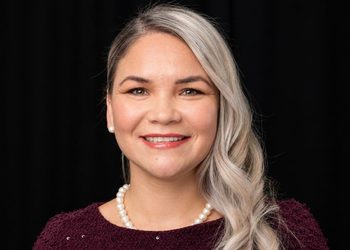
By Erastus Kalenga Hamunjela
For many Namibians, investing still feels like something reserved for the wealthy. There is a widespread belief that one needs hundreds of thousands, even millions, before entering the financial markets.
As a result, many people postpone investing for years, waiting for “enough money” to start. In reality, some unit trusts in Namibia allow investors to begin with as little as N$300 and contribute monthly from N$100. The barrier is no longer capital. The real barrier is understanding.
Unit trusts are among the most accessible and structured investment vehicles available in Namibia today. They allow ordinary individuals to participate in financial markets without selecting individual shares themselves. Yet despite their accessibility, they remain poorly understood and often confused with savings accounts.
A unit trust is a pooled investment vehicle. Instead of investing alone, many investors combine their money into one fund. A professional fund manager then allocates that capital according to a defined strategy. Investors do not buy shares directly; they buy units in the fund. Each unit represents a proportional claim on the underlying assets held by that portfolio. Those assets may include listed shares, government bonds, corporate debt, property securities, money market instruments, or offshore investments. This structure allows small investors to gain exposure to diversified portfolios that would otherwise require significant capital and expertise to build independently.
Understanding the different types of unit trusts is essential. Money market funds focus on short-term, low-risk instruments and are designed primarily for capital preservation. Income funds invest largely in bonds and interest-bearing assets and are suited for investors seeking steady income. Balanced funds combine shares, bonds, and property, offering moderate growth with moderate risk. Equity or growth funds invest primarily in shares and are intended for long-term investors who can tolerate higher volatility. Property funds provide exposure to listed real estate, while international funds diversify portfolios beyond Namibia’s borders. Each category serves a different purpose and carries a different level of risk.
A common misconception is that unit trusts are simply another type of savings account. They are not. Saving and investing serve different purposes. Saving prioritises capital preservation and short-term access to funds. Investing involves allocating capital to productive assets that may fluctuate in value but offer the potential for long-term growth. Unit trusts fall into the investing category. Capital is not guaranteed, and returns vary from year to year. Some years may deliver strong double-digit gains; others may be flat or negative. This variability is not a flaw; it is the nature of market-linked investing.
What makes unit trusts powerful is the combination of monthly contributions, time, and compounding. Consider a practical example. If a parent invests N$5,000 at the birth of a child and contributes N$1,000 per month, increasing that contribution by 5% annually over 20 years at an assumed average return of 17%, the portfolio could grow to approximately N$2.7 million. If the monthly contribution were N$2,000 under identical conditions, the value could exceed N$5 million. The starting amount plays a role, but the dominant factors are consistency and time. Compounding amplifies disciplined behaviour.
Many investors focus heavily on the initial lump sum while underestimating the impact of regular contributions. In reality, a structured monthly debit order is often more important than the starting capital. Investing N$500 per month over decades can be more transformative than waiting years to accumulate a large once-off amount. Time in the market remains more important than attempting to time the market.
Fees are another critical component that investors must understand. Unit trusts may charge initial fees, annual management fees, performance fees, and report a Total Expense Ratio (TER). While these percentages may appear small, over long periods they materially affect outcomes. A difference of one percentage point annually over 20 years can significantly reduce the final portfolio value. Investors should always understand the fee structure before committing capital.
Risk must also be acknowledged. Unit trusts are subject to market volatility, interest rate movements, and in the case of global funds, currency fluctuations. Short-term declines are possible. The greatest long-term risk, however, is behavioural. Investors who withdraw during downturns interrupt the compounding process and lock in losses. Patience and discipline are as important as fund selection.
In Namibia, unit trusts are regulated by the Namibia Financial Institutions Supervisory Authority (NAMFISA), providing oversight and investor protection. Several established providers operate in the market, including Capricorn Asset Management, Old Mutual Namibia, Sanlam Namibia, Allan Gray Namibia, STANLIB, Ashburton, Ninety One, and others. Minimum investment thresholds vary, but they are generally far lower than many assume.
It is also important to recognise that unit trusts are not designed for money needed in the immediate future. An emergency fund, typically three to six months of living expenses, should be held in accessible savings or money market instruments before investing in balanced or equity funds. Investing should be intentional and aligned with clear time horizons.
The most important lesson is, investing does not require millions to begin. It requires starting. The mathematics of compounding favour those who begin early and remain consistent. Waiting for a perfect moment or a large lump sum often delays participation unnecessarily.
Unit trusts are not shortcuts to wealth, nor are they risk-free guarantees. They are structured vehicles that allow ordinary individuals to access diversified portfolios, professional management, and long-term market growth. As access to financial markets becomes easier and more inclusive, the real issue is no longer availability but willingness. The opportunity to invest is there, the responsibility now lies with individuals to make use of it. In the long run, it is consistency and patience, not perfect timing, that drive meaningful growth.
Disclaimer: The information provided in this article is for educational and informational purposes only. It does not constitute financial, investment, legal, or professional advice. Readers should not rely on this content as the sole basis for making investment decisions and are encouraged to seek independent professional advice before acting on any information contained herein.
*Erastus Kalenga Hamunjela is a Namibian investment researcher and financial markets commentator with a strong focus on capital markets, investment literacy, and data driven financial education.