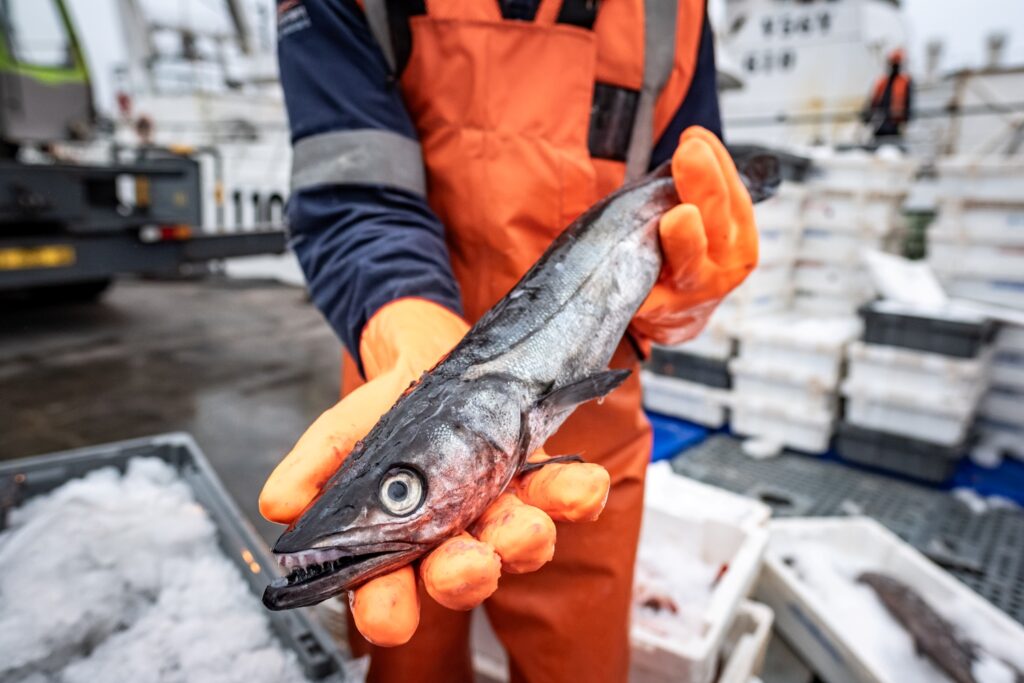
Namibia’s hake fishery has secured its second certification from the Marine Stewardship Council (MSC) following an independent reassessment, confirming the sector’s continued compliance with international sustainability standards.
The reassessment was conducted by Control Union (UK) Limited, which found that the Namibia hake trawl and longline fishery targeting Merluccius capensis and Merluccius paradoxus continues to meet the MSC’s science-based requirements for sustainable fishing.
The evaluation covered hake stock health, fisheries management systems and impacts on the wider marine ecosystem.
The fishery was first certified in 2020, becoming the first in Namibia and the second in Africa to achieve MSC status. The latest recertification reflects sustained collaboration between government, scientists and industry since Independence to rebuild hake stocks while maintaining a commercially viable fishing sector.
“Since Independence, the government, scientists and industry have worked hand in hand to rebuild the hake resource and create a profitable fishing industry that gives back to people and the environment,” said Namibian Hake Association chair Matti Amukwa.
“Achieving MSC certification, first in 2020 and now again, has been a team effort and provides assurance to the world that we are committed to the sustainability of Namibian hake.”
As part of its stock-rebuilding framework, the fishery operates under a defined harvest strategy, with catch limits aligned to scientific advice.
Because Namibia and South Africa exploit the same M. paradoxus stock, MSC-certified operators in both countries are required to cooperate and share stock assessment data, reinforcing regional fisheries management.
According to MSC Programme Director for Africa, the Middle East and South Asia Michael Marriott, environmental monitoring remains a key focus, supported by high levels of observer coverage at sea and effective onshore monitoring and surveillance.
The fishery also assesses risks to sensitive marine habitats and actively manages interactions with Cape fur seals and seabirds. Mitigation measures include the fleet-wide use of bird-scaring lines and the trial of acoustic deterrent technologies.
With support from the MSC Ocean Stewardship Fund, the sector is working with bio-acoustics specialist Dr Thomas Götz and technology firm GenusWave to test targeted acoustic startle technology designed to safely deter seals.
Beyond environmental performance, the sector is expanding its sustainability initiatives. In 2024, six certified hake operators helped establish the Namibia Ocean Cluster, a non-profit organisation aimed at maximising the use of the full harvest, promoting innovation and increasing socio-economic benefits for coastal communities.
“What has been very positive in the case of Namibia is not only the collaboration among stakeholders within the country, but also cooperation with external experts and others operating on the same resource,” Marriott said.
“There is a clear drive to improve, to explore new technological solutions and to safeguard the hake resource for the future.”