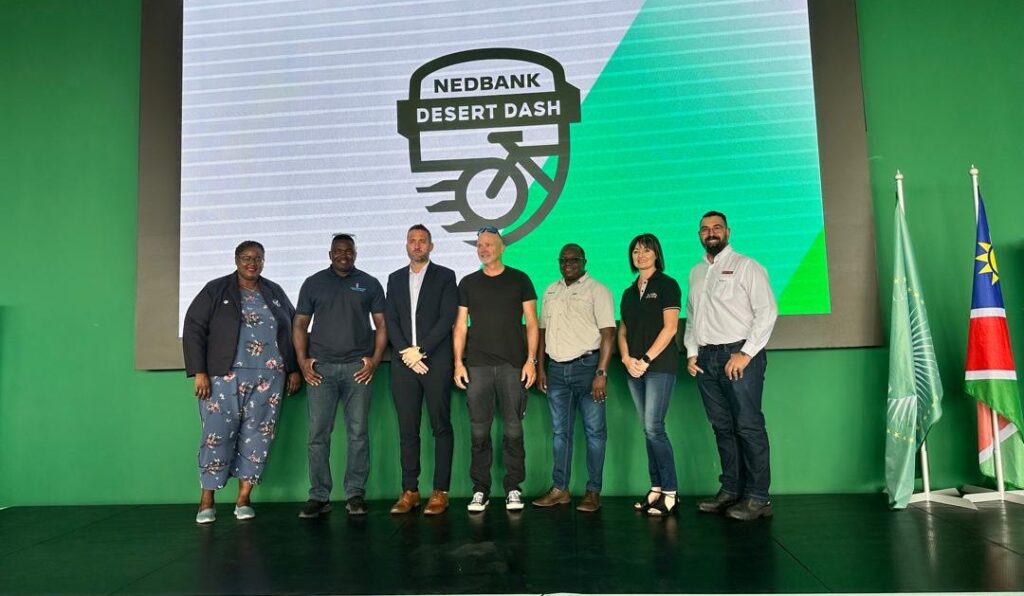
The Nedbank Desert Dash, Namibia’s premier endurance cycling event, injects more than N$25 million into the local economy each year through tourism, hospitality, logistics and related services, according to Nedbank Chief Commercial Officer, JG van Graan.
Speaking at the launch of this year’s edition of the race, van Graan said the event not only boosts businesses along the route, from accommodation and transport providers to restaurants and service stations ,but also creates temporary jobs and supports small enterprises that serve riders and visitors.
“The event injects over N$25 million into the local economy annually, stimulating businesses both directly and indirectly, and creating opportunities across sectors ranging from hospitality to logistics. It has positioned Namibia as a premier destination for sports tourism, one of the fastest-growing global industries and a key driver of economic diversification,” said van Graan.
Now in its 21st edition, the race has evolved from a small local challenge into a global sporting spectacle, attracting more than 1,000 cyclists from across the world to complete the 401-kilometre route from Windhoek to Swakopmund.
Van Graan said this year’s edition will feature a half-hour earlier start for solo riders, a change designed to improve race flow and safety by reducing overlap with two- and four-person teams.
The Half Dash, introduced two years ago, has become increasingly popular, particularly among riders over 50. Tri-bars have also been reintroduced for solo cyclists after more than a decade, reflecting what organisers described as a commitment to continuous improvement and inclusivity.
The success of the event, van Graan added, also depends on the dedication of between 150 and 200 volunteers who assist at water points and checkpoints to ensure smooth operations throughout the race.
Nedbank also launched its #GetMoneyFit campaign at the event, promoting financial discipline by drawing parallels between physical endurance and financial wellbeing.
“It’s about consistency. It’s about intention. It’s about showing up every day and doing the work, even when it’s hard, even when progress feels slow. We live in a world, especially here in Namibia, where financial stress is real and uncertainty can weigh heavily. But we also live in a world where small, intentional actions repeated over time can lead to transformation,” van Graan said.