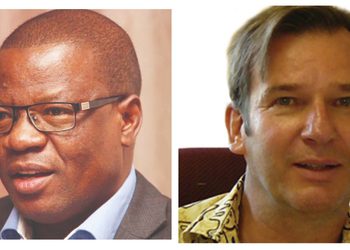
By Dylan Mukoroli
The leadership of H.E Dr. Netumbo Nandi-Ndaitwah presents us with a new dawn in terms of accountability, structural reform and a strong sense of renewal.
Since her days of campaigning to be Vice President of the SWAPO Party & its subsequent Presidential candidate, NNN has made it clear that the SWAPO Party will be a forward-thinking Party and she is stick to her guns on this.
This opinion piece gives contextual meaning to the economic thinking that H.E NNN is extensively lobbying for & what economic thinking guides the administration of the day.
Namibia is going through a tsunami-like wave of economic changes such as green hydrogen & the GDP shaker, Oil & gas. These two emerging sectors both come with promises of job creation, economic growth and most importantly, economic diversification.
These sectors as they mature & gain their footing in Namibia, will double & change the face of our GDP. The most important clarion call is natural resource beneficiation in major industries such as mining.
The issue of raw materials leaving our country that doesn’t reap benefits. Regardless of commentaries on the cost of beneficiation, it remains an integral part where incentives can be arranged for beneficiation to take place, in such a manner where it would not compromise the benefits the country ought to receive.
We support that it cannot be business as usual when it comes to the benefits derived from these two keys industries and the overall structure of how the state operates. Benefits must stretch far and wide and the natural resource beneficiation must be prevalent in long term planning.
Namibia as an emerging economy stand at a crossroads where traditional economic models & plans often fall short in addressing the unique challenges of low growth, inequality, and integration. In as much as we have seen strong foreign direct investment figures and economic growth figures netting 3-4%, it still doesn’t equate to job creation.
New economic thinking being promoted by H.E NNN presents innovative & adaptive approaches to economic policy. This is not just desirable but essential for measurable growth and resilience of our already fragile Namibian economy.
This is important because it allows there to be checks and balances as to what works and deploy all resources to it. By rethinking conventional frameworks, Namibia can unlock opportunities, address structural weaknesses, and chart a path toward equitable prosperity. We are actively taking on the issue of slow growth and spending not being able to steer the economy around.
Investment has had serious inflows into our economy primarily from Oil & Gas investments. We now need to answer the question of investment & job creation. How can we get investment to equate to job creation.
New economic thinking embraces technology & agriculture as catalysts for transformation. Emerging countries can leapfrog outdated systems by adopting digital infrastructure and vigorous agro processing and value addition, renewable energy, and fintech; which we have very fertile grounds for.
Moreover, innovation must extend beyond tech to economic structures. Experiments like conditional basic income pilots in India or cooperative business models in Latin America demonstrate how rethinking resource distribution can reduce poverty and stimulate local economies.
These initiatives require bold policy frameworks that prioritize long-term human development over short-term fiscal conservatism. This plays into what NDP6 is advocating for. Resource distribution must be met with initiatives and programs that people can venture into and cannot be dependent on CBIG for a lifetime.
As an emerging country, we grapple with stark inequalities, whether urban-rural, gender-based, or class-driven. The current administration places equity at its core, recognizing that growth without inclusion fuels instability.
Inclusive & implementable policies also strengthen social cohesion, and for our Namibia this is critical in diverse country where ethnic or regional tensions can undermine progress, indeed it must be a Namibian house for all who live in it.
By prioritizing marginalized groups—through affirmative action, women-led entrepreneurship programs, or rural infrastructure—new economic thinking fosters unity and shared purpose, reducing the risk of populism. However, the boy child also now needs to be dusted off and further capacitated to ensure he stays on par.
Environmental degradation poses an existential threat to emerging economies, many of which rely on agriculture or natural resources.
New economic thinking integrates sustainability into development strategies, moving beyond the growth-at-all-costs mentality and prioritizes safe keeping and trusted methods that have been proven to be safe and efficient.
For example, the small village of Leonardville in the Cattle country is at crossroads where uranium deposits have been found in the Stampriet aquifer. In a case where emotions triumphs science, the mining method, In-situ leach recovery that has been proven to be safe, Leonardville has the potential to be Namibia`s next big success mining town story and add to existing research around the method of In-situ Leach recovery.
This economic diversification will change the face of Omaheke as we know it. The two can co-exist.
This shift requires rethinking incentives. Subsidies for oils and fuels, common in many emerging nations, could be redirected toward clean energy or sustainable agriculture. International partnerships, such as climate finance agreements by the Environmental Investment Fund can support these transitions, but only if we as a country advocate for policies that align with their developmental needs.
New economic thinking, under the administration of H.E Dr. Netumbo Nandi-Ndaitwah requires collective visionary leadership and support willing to challenge entrenched interests and global dogmas. It also demands public engagement to ensure policies reflect citizens’ needs. Platforms What the SWAPO Youth league is currently implementing have amplified voices in from all corners, enabling grassroots movements to advocate for economic reforms. Governments must harness such tools to foster dialogue, educate citizens,
*Dylan Mukoroli is passionate about development finance & sustainable community development.