By Chaze Nalisa-Jagger
Across professional platforms such as LinkedIn, some argue that employee surveys are outdated in a world of instant feedback, digital dashboards and continuous listening tools.
However, surveys remain one of the few methods that capture a comprehensive, structured picture of employee sentiment across an entire organisation. They are not obsolete, but they must evolve.
When surveys fail to produce visible action, they lose meaning and erode trust. The real issue is not the survey itself but the perception that organisations are unwilling to turn insight into progress.
This perception, often voiced in focus groups, exit interviews and feedback sessions, does not stem from employee apathy but from disillusionment.
Before the Survey: Setting Purpose and Readiness for Truth
The groundwork for a successful survey is laid long before the first question is sent. The organisation must clearly define its purpose, scope and desired outcomes.
Leaders should understand that a survey is not an evaluation tool, but a mirror that reflects employee experience. This requires readiness to face uncomfortable truths with humility and openness.
Communication before launch is essential. Employees must know why the survey matters, how responses will be used, and what actions will follow.
When purpose and expectations are clearly communicated, employees respond with trust and honesty, and the organisation is better positioned to act with clarity.
During the Survey: Listening with Intent
The survey process itself must reflect the organisation’s values of openness and respect. It is not enough to achieve high participation; the goal is meaningful participation. Employees must feel psychologically safe to answer honestly.
Data should be gathered with care, combining numerical results with qualitative comments to provide a balanced view. Maintaining visibility and communication during the survey period reassures employees that their voices are heard.
When leaders and HR actively support the process, it reinforces the message that feedback matters and that this is not a compliance exercise, but an act of organisational learning.
After the Survey: From Feedback to Action
The moment the survey closes is the beginning of real work. Results should be shared promptly and transparently, even when they reveal difficult realities.
Avoiding or filtering results undermines trust. Leaders, including HR, must ensure that findings are communicated clearly, with both challenges and strengths acknowledged.
Employees should be invited into the next stage of the process: creating solutions together. Genuine collaboration builds ownership and commitment.
When actions are visible and outcomes are tracked over time, employees can see that their feedback leads to change. This is where surveys evolve from diagnosis to transformation.
Implementation: From Insight to Systemic Progress
Sustained progress requires connecting survey findings to the wider systems that shape behaviour and culture. Organisations must ask whether their structures, leadership practices and policies reinforce or undermine engagement.
Addressing surface issues without understanding root causes leads to short term improvement but long-term frustration. Instead, feedback should inform strategic planning, leadership development and organisational design.
When survey insights are linked to measurable outcomes and revisited regularly, they become a vital instrument of systemic progress rather than an isolated event.
The Role of HR Leadership
Human Resources holds a pivotal role in transforming survey feedback into lasting improvement.
HR is both strategist and facilitator, responsible for ensuring that surveys are designed, delivered and analysed in a way that produces meaningful insight.
Its responsibility does not end at data collection; HR must interpret results, identify trends, and connect findings to people strategies such as leadership capability, performance management, and workforce development.
HR also has a critical role in supporting leaders to understand the results of their teams, coaching them to listen without defensiveness and to create collaborative action plans.
By linking progress on survey outcomes to leadership performance reviews and organisational KPIs, HR ensures accountability and reinforces the message that culture and engagement are shared responsibilities, not optional initiatives.
HR’s ultimate goal is to build a feedback culture where listening and action become part of the organisation’s rhythm, not a once-a-year ritual.
The Role of Leadership
Leadership determines whether survey insights lead to real change or fade into disappointment. Executives and managers must treat survey results as strategic intelligence, not criticism.
Their role is to interpret feedback through a lens of learning, asking what the data reveals about systems, behaviours and communication. Leaders set the tone by responding with humility and transparency.
They must engage with their teams, discuss results openly, and co-create solutions rather than imposing them. True leadership in this context is about curiosity, courage and follow through.
When employees see leaders taking feedback seriously and acting visibly, it strengthens credibility, loyalty and engagement.
Leaders must also model the behaviours the survey aims to promote, listening, accountability and respect, turning the process itself into a demonstration of the values they wish to instil.
The Role of All Employees
Every employee, regardless of role or level, has a stake in the success of a survey. Participation is more than answering questions; it is a statement of engagement and ownership in the organisation’s growth.
Employees contribute by being honest, constructive and specific in their responses. After the survey, they play an equally important role in supporting and implementing agreed actions.
Progress cannot rest on leadership alone; it depends on shared commitment. When employees understand that their feedback shapes decisions and that they are part of the solution, a culture of collective accountability emerges.
This mindset turns surveys into living dialogues that drive collaboration, innovation and continuous learning.
Final Thought: Never Diagnose Without the Will to Act
The value of any survey is measured by the action that follows it. When organisations ask for feedback but fail to act, they teach employees that honesty is futile. When they respond transparently and consistently, they build credibility and engagement.
Regular updates on progress, even small wins, reinforce belief in the process. Over time, this pattern of listening and responding strengthens trust and unites employees around shared goals.
Trust is not built through promises, but through proof, visible, sustained and inclusive action.
Surveys should never be treated as an end but as a beginning, an opportunity to reflect, engage and transform.
Their impact depends not on the questions themselves, but on the integrity of the process, the courage to face the answers, and the shared determination to change.
If an organisation is not ready to act, it should not ask. When HR, leaders and employees each play their part, feedback becomes a living force for progress, shaping not only how organisations measure success, but how they achieve it.
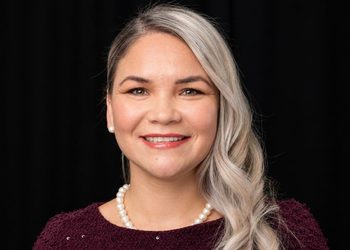
* Chaze Nalisa-Jagger is the Head of HR at IntraHealth Namibia