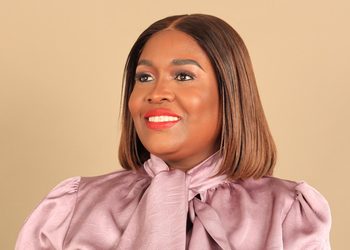
By Chaze Nalisa-Jagger
In today’s leadership hiring landscape, trust is no longer a soft ideal, it is a core leadership competency. It is assessed, measured, and analysed, particularly in high-risk, fast-paced environments.
If you have ever taken a psychometric assessment, particularly for a leadership role, you have likely encountered prompts that probe your default orientation toward trust.
Statements like “I generally trust people,” or “People cannot be trusted,” are not philosophical notions, they are behavioural indicators, silent signals of how you might lead, show up in an organisation, and how you are likely to be perceived by others.
These assessments typically begin with standard instructions:
“Do not overthink, there are no right or wrong answers, just respond authentically.” While this is true in principle, many senior professionals instinctively weigh the implications of each choice, because they know that leadership is, at its core, a relationship of influence built on trust.
How You Trust Shapes How Others See You.
“Trust but verify” is no longer just a Cold War maxim, it is a core principle in modern leadership. The ability to build trust while maintaining accountability is a quiet test, often invisible but deeply influential. It is embedded in assessments, observed in interviews, and scrutinised in references.
How you extend trust directly affects your leadership brand. Leaders who trust readily are often viewed as open, empowering, emotionally intelligent, and collaborative.
They are seen as people who foster psychological safety, enabling innovation, accountability, and ownership across teams.
However, unchecked or blind trust can lead to perceptions of naivety or poor judgment, especially if major errors occur under your watch.
Conversely, leaders who withhold trust or lean toward scepticism may be viewed as cautious or analytical, but risk being seen as micromanagers or as lacking confidence in others.
Perception in leadership matters. Your approach to trust does not just shape how you evaluate others, it shapes how others evaluate you. Employees, peers, and superiors quickly form impressions: Is this someone who believes in people? Can they delegate effectively? Do they offer opportunities to prove oneself?
Being too trusting or too guarded creates imbalance. The modern leader must therefore master the art of calibrated trust, knowing when and how to extend trust and when to reinforce it with structured verification.
Verifying Without Being Perceived as Sceptical.
This is where the balance becomes both art and strategy. Verification is essential in leadership, whether it is reviewing financial reports, tracking project progress, or assessing team reliability.
How verification is conducted makes all the difference.
Verification should not feel like suspicion. When done well, it is framed as clarity, accountability, shared responsibility and so on.
The best leaders build verification into the system, not into the tone of their voice. Here are some common practices; transparent KPIs, regular check-ins, collaborative planning, open feedback loops, public dashboards or shared progress tracking tools. Tone and timing also matter. Saying “Just checking in so I can update leadership,” is different from “I need to make sure this was actually done.” One signals shared responsibility; the other implies doubt.
In short, verification should feel like support, not surveillance. It should reinforce trust and not undermine it. This is what we call systematic trust: an operational framework that embeds trust into how people work together. It can be engineered through systems that encourage transparency, accountability, and autonomy. The benefits of Systematic Trust may include the following:
- Scalability: systems of trust enable leaders to scale without direct control over every decision or outcome. You don’t need to be everywhere to ensure things are done well.
- Consistency: structured trust frameworks reduce variability in how people are managed, reviewed, or supported, leading to fairness and predictability.
- Resilience under pressure: during high-stress situations (e.g. product failures, budget cuts), systematic trust creates stability. Teams know how to operate even under scrutiny.
- Increased innovation: when people feel trusted and psychologically safe, they are more likely to take intelligent risks, challenge norms, and propose bold ideas.
- Retention and engagement: trust breeds loyalty. Employees are far more engaged when they feel believed in and supported, not policed or doubted.
Leadership is not about trusting blindly or verifying aggressively. It is about creating environments where both can coexist, where trust is extended thoughtfully, and verification reinforces clarity, accountability, care and support.
* Chaze Nalisa-Jagger is the Head of Human Resources at IntraHealth Namibia