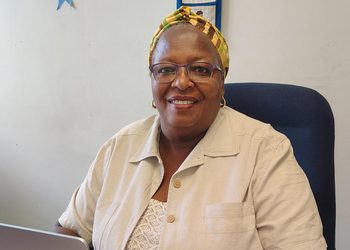
By Des-Rose Engelbrecht
As climate impacts grow more severe, adaptation is no longer a choice—it is a necessity. In Africa, where rising temperatures, erratic rainfall, and food insecurity are worsening, climate adaptation is a matter of survival. Yet too often, adaptation efforts overlook the principle of climate justice—and risk deepening the very inequalities they seek to address.
The recent advisory opinion from the International Court of Justice (ICJ), the most significant legal ruling on climate change to date, underscores a pivotal truth: adaptation must be rooted in equity, inclusion, and human rights.
As a young African climate justice advocate, currently serving as a member of the Global Center on Adaptation’s Youth Advisory Panel and Secretary-General of the Environmental Lawyers Network of Namibia, I’ve seen first-hand how young people are driving conversations that link law, equity, and climate action. For us, this is not an academic debate—it is lived reality.
Defining Climate Justice
Climate justice asks not just what action is taken, but who decides, who benefits, and whose knowledge counts. Scholars outline four key dimensions essential to just adaptation:
Distributional justice: fair allocation of adaptation resources
Procedural justice: inclusive, transparent decision-making
Recognitional justice: respect for diverse identities and knowledge systems
Intergenerational justice: safeguarding the rights of future generations
But in practice, recognitional and intergenerational justice remain largely absent in national plans. Many remain top-down, donor-driven, and short-term, failing to tackle the root causes of vulnerability. A just adaptation approach must centre local voices, especially those of Indigenous peoples, women, and youth.
Youth on the Frontlines
The ICJ case itself was born from youth activism—led by Pacific Island youth, embraced by Vanuatu, and supported by African and Caribbean governments. As someone who began their journey in student activism through the EcoMaties Society at Stellenbosch University, witnessing this landmark ruling was a full-circle moment. It affirms what we have always believed: youth are not just beneficiaries—we are change agents.
Africa’s youth are developing early warning tools, leading community projects, and shaping policy. Yet we face barriers: limited funding, tokenistic inclusion, and little mentorship. With Africa’s population surging, and climate risks intensifying, intergenerational justice demands that young people be treated as equal partners in adaptation.
Does the Global Goal on Adaptation Deliver?
The Global Goal on Adaptation (GGA), part of the Paris Agreement, aims to enhance resilience. But critics warn it lacks equity benchmarks—undermining its effectiveness. Five major concerns emerge:
No measurable equity indicators to track who benefits
Risk of widening inequality, favouring wealthier countries
Limited inclusion of marginalised voices in governance
No accountability mechanisms to ensure fairness
Missed opportunities for transformative, locally led solutions
Without justice at its core, adaptation cannot deliver lasting change.
Four Priorities for Just Adaptation
To ensure adaptation meets the needs of the most vulnerable, we must pursue four key shifts:
1. Align local realities with global ambitions
Local governments are closest to the communities they serve—but often lack resources and voice. The ICJ opinion helps bridge this gap. African countries argued climate adaptation is a human right, and that wealthier nations have a legal duty to support vulnerable countries. This framing could reshape climate finance, diplomacy, and legal accountability.
2. Measure what matters
The ICJ ruling reinforced the importance of accountability. Countries cannot continue to miss climate targets without consequences. Justice-based indicators must be built into adaptation plans to track inclusion, fairness, and progress.
3. Fund locally led solutions
Grant-based finance must be accessible and simplified for frontline actors. While the Loss and Damage Fund was agreed at COP27, operational details remain unresolved. The ICJ ruling adds pressure, affirming that support for vulnerable nations is not charity—it’s a legal obligation.
4. Include the most affected
Women, youth, Indigenous peoples, and local communities must be meaningfully involved in shaping adaptation. Valuing local knowledge systems and lived experience isn’t just right—it leads to more effective and sustainable solutions.
A Call to Action
Climate adaptation is not just technical—it is moral and political. As the world adapts to climate change, we must ask: Who is protected—and who is left behind?
By putting equity at the heart of our adaptation strategies, we can move beyond surviving climate change to thriving with dignity and fairness.
The ICJ ruling marks a turning point. It is now up to policymakers, civil society, and the international community to follow through. Let us reframe adaptation as a movement for justice—and ensure that those most affected are also those most empowered to lead.
* Des-Rose Engelbrecht is a Youth Advisory Panel Member 2025 and Secretary-General of the Environmental Lawyers Network of Namibia