Tuesday, November 10, 2026
Subscribe
The Brief | Namibia's Leading Business & Financial News
  • Home
  • Companies
    • Finance
    • Agriculture
    • Technology
    • Property
    • Trade
    • Tourism
  • Business & Economy
  • E-PAPERreader
  • Mining & Energy
  • Opinions
    • Analysis
    • Columnists
  • Africa
No Result
View All Result
The Brief | Namibia's Leading Business & Financial News
Subscribe
No Result
View All Result
Home Companies Finance

Understanding the price of money

by editor
July 6, 2023
in Finance
6
A A

Have you ever wondered why everything from cars to sweets alongside the road is suddenly getting expensive?

In times of economic chaos, it can be challenging to stay ahead of the curve. One of my greatest mentors is a 90-year-old man who resides in the beautiful village of   Ondeikela, my home village. He was a nurse by profession, and he had once told me that; for centuries, working hard and saving up diligently would have set you up for financial security and a comfortable retirement.

Today, the above statement is overruled by troubling economic times and the loss of value of money. Times when he took me on a tour of the nuts and bolts that used to hold the economy together and it all sounded like a fairy tale to me. Funny enough, most of my generation is yet to experience financial security. Retiring comfortably is not even yet a dream for my generation.

This is because, my generation is born in a new financial world – one where your savings lose value faster than you can build them, a global mountain of debt pilling up  even higher, and most people slip backwards no matter how hard they try. This is because, the price of money and inflation have a unidirectional relationship running on a paraffin speed.

Inflation is currently at 6.3% and increase of 0.2% month on month. Using the concept of time value of money, our savings, if any, is losing its value over time.

We should never forget that money is a commodity just like any other. In the same manner you pay to buy a loaf of bread, money itself also has a price. This price is indicated by the interest rate you pay to borrow the money, which is usually a percentage of the capital lent to you. The easiest price of money to identify are those on mortgages bonds. When you sign a mortgage (Home loan), the price of this loan will be set specifically by the interest rate. The higher it is, the more expensive the loan is and the lower it is, the cheaper the loan. Academics refer to the price of money as the rate at which borrowers pay to access money and lenders get paid for providing money. 

The price of money is set by central banks, like, the federal reserve bank in the US and South African Reserve in South Africa. The central bank of each country use price of money to control the supply of money in the economy and to stimulate or slow down economic growth. In Namibia, Bank of Namibia set the price at which money is bought and sold in Namibia.

Several factors determine the price of money including inflation, economic growth, politics, and market forces. Under fair circumstances, if you see the price of money increasing, it is it is the aforementioned factors that inform the Monetary Policy Committee (MPC) of the Bank of Namibia to react. The opposite is also true if   the price of money decreases.

These prices are key for most financial products, such as loans or deposits. When prices are low, the return on deposits will be limited and if prices rise, the return will increase. The same goes for loans and mortgages. If the price is low, the cost of financing follow suits.

Now and then we see critics of repo increments on social media, complaining about the subject, it is because they fear that the increase will make their loans more expensive: the “price of money”. The most obvious consequence of prices of money are loans. The higher the price, the expensive the loans.

In conclusion, understanding the price of money is key to staying ahead in times of economic chaos. Thus, the importance of price of money in the household economy is obvious, so it is important to watch out for any changes in the market and to stay informed so you can make better financial decisions. One would also advise that as domestic economic players, we need to closely watch the economic trends of our mother market, South Africa.

*Trophy Shapange is a Managing Director at Hangala Capital Investment Management and can be reached at trophy@hangalacapital.com

 

author avatar
editor
See Full Bio
Previous Post

Time to connect Leadership, Strategy and Culture in your organisation

Next Post

Arcadia unaffected by Namibia’s metals export ban

Must Read

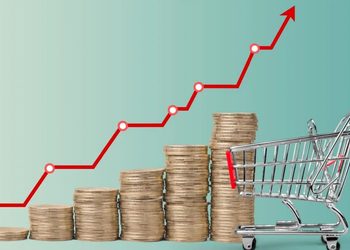
Stacked coins increasing in height beside a shopping cart, with a red upward growth line indicating rising value or costs.
Finance

Namibia’s inflation expected to peak at 6.7% in early 2027

November 10, 2026
Man in a black suit and glasses delivering a speech at a wooden podium with a microphone, backdrop features a circular teal/yellow logo banner above.
Finance

GIPF targets investment bottlenecks to unlock funding for Namibian projects

November 10, 2026
A man in a dark suit and glasses speaks at a clear podium during a formal event, with a large event backdrop behind him reading launch text.
Finance

GIPF to host 300 delegates at Pension and Investment Symposium

November 6, 2026
Group of formally dressed people standing under a tent at a ceremony, with a woman in blue attire at right and Dangote branding visible on podiums in front.
Finance

Afreximbank commits to financially backing Dangote and other credible investors in Namibia

November 5, 2026
First Capital, Kuleni to administer GIPF’s Pension-Backed Home Loan Scheme
Finance

GIPF to host two-day Pension and Investment Symposium

November 5, 2026
Six professionals pose in front of a Namibia Trade Network backdrop; the central man holds a Namibia Trade brochure.
Finance

Standard Bank warns of rising AI-driven fraud threats in Namibia

November 5, 2026
Load More

Related News

Thought leadership – a quick guide

Thought leadership – a quick guide

January 9, 2025
MSC Cruises to recruit over 200 Namibians for onboard hospitality jobs

MSC Cruises to recruit over 200 Namibians for onboard hospitality jobs

April 10, 2026
Namibia secures spot in N$18 billion global decarbonisation programme

Thyssenkrupp Uhde targets Namibia green industrial and marine projects in 2026

May 15, 2026

Browse by Category

  • Africa
  • Agriculture
  • Analysis
  • Business & Economy
  • Columnists
  • Companies
  • e-edition
  • Finance
  • Finance
  • Fisheries
  • Green Hydrogen
  • Health
  • Investing
  • Latest
  • Market
  • Mining & Energy
  • Namibia
  • namibia
  • News
  • Opinions
  • Property
  • Retail
  • Technology
  • Tourism
  • Trade
The Brief | Namibia's Leading Business & Financial News

The Brief is Namibia's leading daily business, finance and economic news publication.

CATEGORIES

  • Business & Economy
  • Companies
    • Agriculture
    • Finance
    • Fisheries
    • Health
    • Property
    • Retail
    • Technology
    • Tourism
    • Trade
  • e-edition
  • Finance
  • Green Hydrogen
  • Investing
  • Latest
  • Market
  • Mining & Energy
  • namibia
  • News
    • Africa
    • Namibia
  • Opinions
    • Analysis
    • Columnists

CONTACT US

Cell: +264814612969

Email: newsdesk@thebrief.com.na

© 2026 The Brief | All Rights Reserved. Namibian Business News, Current Affairs, Analysis and Commentary

Welcome Back!

Login to your account below

Forgotten Password?

Retrieve your password

Please enter your username or email address to reset your password.

Log In
No Result
View All Result
  • Home
  • Companies
  • Mining & Energy
  • Business & Economy
  • Opinions
    • Analysis
    • Columnists
  • Africa

© 2026 The Brief | All Rights Reserved. Namibian Business News, Current Affairs, Analysis and Commentary

This website uses cookies. By continuing to use this website you are giving consent to cookies being used. Visit our Privacy and Cookie Policy.