Thursday, September 10, 2026
Subscribe
The Brief | Namibia's Leading Business & Financial News
  • Home
  • Companies
    • Finance
    • Agriculture
    • Technology
    • Property
    • Trade
    • Tourism
  • Business & Economy
  • E-PAPERreader
  • Mining & Energy
  • Opinions
    • Analysis
    • Columnists
  • Africa
No Result
View All Result
The Brief | Namibia's Leading Business & Financial News
  • Home
  • Companies
    • Finance
    • Agriculture
    • Technology
    • Property
    • Trade
    • Tourism
  • Business & Economy
  • E-PAPERreader
  • Mining & Energy
  • Opinions
    • Analysis
    • Columnists
  • Africa
No Result
View All Result
The Brief | Namibia's Leading Business & Financial News
Subscribe
No Result
View All Result
Home Companies Property

Local authority requirements making low-cost houses expensive

by editor
July 25, 2023
in Property
6
A A

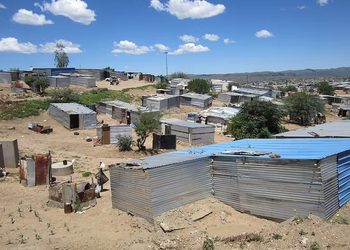
The Government Institutions Pension Fund (GIPF) says the current building requirements by local authorities are making the delivery of low-cost housing in Namibia challenging.

The Fund said the requirements are ruining efforts to reduce the country’s housing backlog.

“We have only certain materials and standards that are allowed by local authorities, and this has an impact on the overall cost of the housing units that are being produced,” GIPF outgoing Principal Officer and Chief Executive David Nuyoma told The Brief.

“Cement, brick, and all of these are specified. If you use something different, you may not get your house certified. So these things have an overall impact on how much a house will cost. I know also now you find houses starting from N$400,000 in a local authority environment, town and that is actually some of the cheapest you can get. Absolutely. So, and that includes your land, whereas, in some areas, land alone is more than a million, a small plot of 800 square metres.”

He said the current building requirements do not make a provision for alternative building materials for house construction.

“We need as a country to challenge ourselves on using various models and housing material and accept them to bring the cost of housing provision down. Otherwise, that challenge will remain there almost forever. So is it fair to say that there is a need for a review in the current local authority requirements,” Nuyoma said.

“When I was CEO of DBN, we even tried to find alternative materials and what they call, faster to build and cheaper and that is when we realised. No contractor will use them because they will not be accepted by a local authority. So that is a key issue that perhaps should become central to the conversation on how to provide houses in a significant way.”

Nuyoma said the fund’s investment in the Osona village had made a significant impact on housing delivery in the country, while also providing a return for the GIPF.

“We have investments that really yield excellent results and housing is one of them. I have seen that in some areas, for some reason, it has been difficult, but with us, it has been one of the most rewarding from a societal giving perspective, but also from a return perspective. We are very pleased with that. All our houses, for example, in Osana are constructed when they have a buyer. We don’t build before there is a name. That is the philosophy we have been following, and it works. For us, it has worked, and we have been able to make headway with it,” he said.

The project, which will eventually include 15,000 residential units, is one of the largest and most inventive housing initiatives, with close to 1,500 units already completed and sold to new owners over the last seven years.

This comes as Minister of Urban and Rural Development Erastus Uutoni says Namibia still has a long way to go to make housing more affordable for all.

The Minister noted that the current minimum price of houses built under various housing programmes was out of reach for most people.

According to the Association of Local Authorities in Namibia, Namibia requires about 50,000 housing units to be constructed countrywide in the next 10 years to solve the country’s housing crisis.


author avatar
editor
See Full Bio
Previous Post

Namdia eyes diamond polishing

Next Post

Oryx Properties raises N$312.7m towards Dunes Mall acquisition

Must Read

Two people exchange house keys in front of a 'Sold' sign, signaling a completed real estate sale or handover.
Property

Namibians added N$438.7m more debt in July to buy houses and cars

September 3, 2026
Cluster of white-roofed houses nestled in a desert landscape with hills under a blue sky.
Property

Elisenheim advances low-density Nature Estate expansion

September 2, 2026
Street scene with a Khomasdal sign, colorful building on the right, and a banner advertising 7 days a week under a clear blue sky.
Property

City of Windhoek plans 750 erven in two new Khomasdal townships

August 31, 2026
Five professionals sit at a long blue Standard Bank table during a formal event, with water bottles and small floral arrangements in front of them at a branded backdrop.
Property

Thirty-five families to receive homes under Buy-a-Brick initiative

August 25, 2026
Close-up of a man with a full beard wearing a light teal striped shirt, seated in an office setting.
Property

Rethinking homeownership in Namibia: What Limpopo can teach us about solving the housing crisis

August 24, 2026
Windhoek approves N$1.7 billion building plans in six months
Property

Real estate, retail dominate Namibia’s merger activity over past 16 years

August 20, 2026
Load More

Related News

EU ready to support Namibia’s exit from FATF grey list

EU ready to support Namibia’s exit from FATF grey list

July 8, 2024
From prophecy to reality: How Dubai’s disruption validates Namibia as the next Dubai of Africa

Namibia’s entrepreneurship training obsession: Lots of workshops, but little real help

March 12, 2026
Underfunded rail sector weakens Namibia’s logistics ambitions

Underfunded rail sector weakens Namibia’s logistics ambitions

September 1, 2025

Browse by Category

  • Africa
  • Agriculture
  • Analysis
  • Business & Economy
  • Columnists
  • Companies
  • e-edition
  • Finance
  • Finance
  • Fisheries
  • Green Hydrogen
  • Health
  • Investing
  • Latest
  • Market
  • Mining & Energy
  • Namibia
  • namibia
  • News
  • Opinions
  • Property
  • Retail
  • Technology
  • Tourism
  • Trade
The Brief | Namibia's Leading Business & Financial News

The Brief is Namibia's leading daily business, finance and economic news publication.

CATEGORIES

  • Business & Economy
  • Companies
    • Agriculture
    • Finance
    • Fisheries
    • Health
    • Property
    • Retail
    • Technology
    • Tourism
    • Trade
  • e-edition
  • Finance
  • Green Hydrogen
  • Investing
  • Latest
  • Market
  • Mining & Energy
  • namibia
  • News
    • Africa
    • Namibia
  • Opinions
    • Analysis
    • Columnists

CONTACT US

Cell: +264814612969

Email: newsdesk@thebrief.com.na

© 2026 The Brief | All Rights Reserved. Namibian Business News, Current Affairs, Analysis and Commentary

Welcome Back!

Login to your account below

Forgotten Password?

Retrieve your password

Please enter your username or email address to reset your password.

Log In
No Result
View All Result
  • Home
  • Companies
  • Mining & Energy
  • Business & Economy
  • Opinions
    • Analysis
    • Columnists
  • Africa

© 2026 The Brief | All Rights Reserved. Namibian Business News, Current Affairs, Analysis and Commentary

This website uses cookies. By continuing to use this website you are giving consent to cookies being used. Visit our Privacy and Cookie Policy.