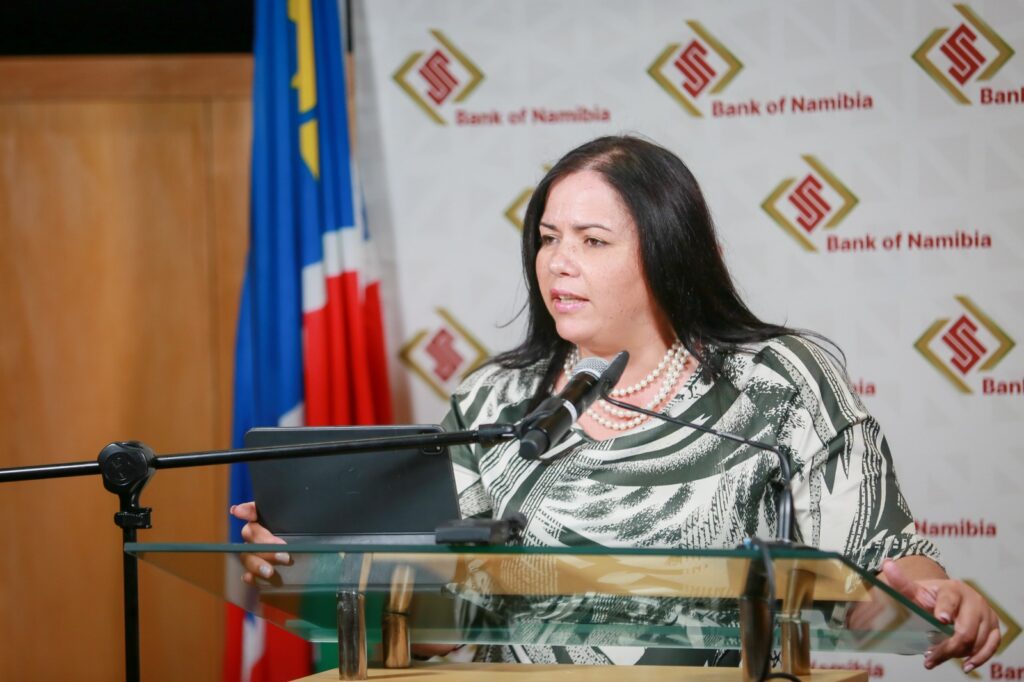
Namibia recorded N$50.3 million in reported fraud across card, electronic funds transfer (EFT) and electronic money payment channels between January and October 2026, Bank of Namibia (BoN) Deputy Governor Leonie Dunn has revealed.
Speaking at the second Fraud and Cybersecurity Summit in Windhoek on Tuesday, Dunn said increasingly sophisticated financial crimes were threatening the financial security of individuals and businesses, as well as confidence in the country’s financial system.
“Behind that figure are people and businesses whose financial security and confidence have been threatened, with irrecoverable financial losses an unavoidable consequence,” she said.
Reported fraud exposure increased by 18.9% to N$32.5 million during the first half of 2026, compared to N$27.3 million recorded during the corresponding period in 2025.
The increase was largely driven by EFT fraud, which rose by 47.3% from N$14.8 million to N$21.9 million.
Card fraud declined by 10.8% to N$10.4 million, while electronic money fraud decreased by 72.6% to approximately N$229,000.
Financial institutions recovered approximately N$15.6 million during the first six months of the year, representing 48% of the reported fraud value.
Recovery rates stood at approximately 80% for card fraud and 34% for EFT fraud, while no recoveries were recorded for electronic money fraud.
Dunn attributed the higher recovery rate for card fraud to established chargeback mechanisms, while EFT fraud presented greater challenges because victims were often manipulated into authorising transactions.
She said fraudulent proceeds were subsequently transferred through multiple accounts, withdrawn in cash or converted into cryptocurrencies, complicating recovery efforts.
Dunn warned that the growing use of artificial intelligence (AI) was increasing the complexity of financial crime, with criminals able to clone voices, impersonate individuals and conduct large-scale phishing attacks.
According to INTERPOL’s African Cyberthreat Assessment Report 2026, AI featured in 55% of reported cybercrime cases in 2025, based on a survey of 36 member countries.
In response to growing cybersecurity threats, the central bank gazetted two revised regulatory instruments in June and July 2026.
These include BID-30, which strengthens cybersecurity requirements for banking institutions, and PSD-12, which enhances cybersecurity and fraud controls across the National Payment System.
The central bank is also working with the financial services industry to revise BID-9, the Determination on Fraud and Other Economic Crimes.
Dunn said the Bank had established the Cyber, Operational Resilience and Fraud Mitigation Council to improve coordination across the financial sector.
Through its Cyber Working Group, the council is developing a Financial Sector Incident Response Plan and an industry information-sharing platform to strengthen threat detection and intelligence sharing.
In October, the working group conducted a cybersecurity exercise involving 18 institutions and approximately 50 representatives to assess the sector’s preparedness and incident response capabilities.
Meanwhile, Namibia launched the first-phase pilot of its Anti-Scam Command Centre (ASCC) on 9 November 2026, involving participating banking institutions.
The centre is intended to improve coordination between financial institutions, enabling them to trace, block and preserve funds linked to suspected fraudulent transactions.
Dunn said the next phase would involve assessing the pilot’s effectiveness and expanding cooperation with telecommunications operators, the Financial Intelligence Centre, law enforcement agencies, prosecution authorities and the Office of the Judiciary.
She urged consumers to protect their banking credentials, verify payment instructions and promptly report suspicious transactions.
“There is no shame in being scammed. The shame belongs to the criminal, not to you, the victim. Speak early, report quickly and share what you know, because every account number, message, transaction and phone number can become intelligence,” she said.
Dunn also called on financial institutions to provide secure services, accessible reporting channels and timely assistance to fraud victims.