The Namibia University of Science and Technology (NUST) plans to introduce two new bachelor’s degree programmes in digital arts and animation, and film and television by 2028, as the institution expands its training programmes to support Namibia’s growing creative industry.
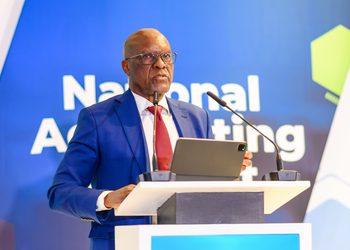
NUST Vice-Chancellor Frednard Gideon said the university was developing a Bachelor of Digital Arts and Animation and a separate degree programme in film and television to equip students with skills in animation, filmmaking and digital content production.
Speaking at a graduation ceremony for animation and scriptwriting students, Gideon said the proposed qualifications would build on the university’s existing short courses and expand opportunities for Namibians seeking careers in the creative sector.
“We are developing two new … programmes. So one is a Bachelor of Digital Arts and Animation, and then the other one for Film and Television. Ladies and gentlemen, here is an opportunity. Come 2028, you should definitely give up your business and come full time,” Gideon said.
The planned programmes form part of NUST’s efforts to expand academic training in creative disciplines and develop qualifications aligned with industry requirements.
Since launching its animation and scriptwriting short courses in September 2025, NUST has graduated 82 students across three cohorts.
The latest graduation ceremony recognised 30 students, comprising 10 graduates from a 2D animation programme and 20 from a scriptwriting course.
Gideon said the 2D animation graduates were among the first students from a Namibian higher education institution to receive internationally recognised qualifications in the field.
“We are especially proud to recognise 10 graduates from the 2D animation programme. To the best of our knowledge, these students are among the first graduates from a Namibian higher education institution to receive an international qualification,” he said.
He said the qualifications could open opportunities for graduates in animation studios, creative agencies, film production companies and digital content development.
Gideon also highlighted the economic potential of the animation industry, encouraging graduates to establish their own creative businesses rather than relying exclusively on formal employment.
He said Namibia needed to increase the production of locally developed animation and television programmes, particularly content aimed at children.
According to Gideon, much of the television and animation content consumed by Namibian children is imported and does not adequately reflect the country’s cultures, languages and experiences.
“Namibia has a rich culture, ladies and gentlemen. We have many languages, unique landscapes, and talented storytellers. Yet we still have very little local children’s television content. Many of the programmes our children watch are imported and often do not reflect our own lives, communities, and experiences,” he said.
Meanwhile, NUST is pursuing partnerships with industry stakeholders to strengthen practical training and provide opportunities for students to develop and commercialise creative content.
Under an existing collaboration, scriptwriting students are expected to participate in an advanced writing workshop in 2027, while selected student concepts will be developed further through production initiatives involving scriptwriting, animation and filmmaking students.
Gideon also expressed interest in strengthening collaboration with the Business and Intellectual Property Authority (BIPA) and the Namibian Broadcasting Corporation (NBC).
He said such partnerships could help students protect their intellectual property, develop locally produced content and gain access to industry networks and potential audiences.
The proposed degree programmes are expected to expand NUST’s role in training professionals for Namibia’s animation, film, television and digital content industries.