By Hilda Basson-Namundjebo
One of the most important distinctions a leader can make is understanding the difference between power and leadership.
Power is often granted while leadership is earned. And the way power is conferred is through election, appointment or promotion.
Leadership emerges when people willingly trust, follow and believe in your stewardship. While the two are not mutually exclusive, they are not the same thing.
This distinction becomes clearer when viewed through the lens of time. The ancient Greeks described time in two ways: Chronos and Kairos.
Chronos is measured time. It is the time of calendars, clocks, terms of office and constitutional mandates. It is sequential and predictable.
Chronos measures: How much time do I have ?, while Kairos is different. Kairos is the moment of significance and the divine.
It is the opportune moment that carries the possibility of transformation. Kairos asks: What is this moment of destiny asking of me?
In modern democracies there is a third form of time worth considering: Political Time.
Political time is not the same as Chronos, even though it is measured through it. Political time is the temporary authority entrusted to an individual through a democratic process.
It begins on the day a persona assumes office and ends the day that persona leaves it. In Namibia, political time is measured in five-year cycles.
Political time is borrowed time. It is rented time. It is stewardship time. But the problem is that many leaders mistake rented time for permanent ownership.
The moment individuals begin to identify themselves with the position rather than the purpose of the position, leadership starts to deteriorate into entitlement.
Political time has a peculiar effect on people. Because they know it is fleeting, they often seek to maximise their authority while they have it.
Rather than becoming servants of the office, they become consumers of it. Rather than asking how they can create value, they focus on extracting value.
This is where John C. Maxwell’s Five Levels of Leadership becomes particularly relevant.
Maxwell identifies Position as the first and lowest level of leadership. At this level, people follow you because they have to.
The authority comes from the title rather than from the person holding it. As an example : a minister can issue instructions because they are the minister. A chief executive can make demands because they are the chief executive.
Positional authority is necessary. Every institution requires structure and accountability. The danger emerges when people never advance beyond that level.
Those trapped in positional leadership behave more like bosses than leaders. They become dependent on visible demonstrations of authority.
They require constant affirmation that their position matters. They need ordinary people to acknowledge, validate and perform respect toward the office.
I remember a Namibia where citizens rose for the President, the Vice President and the Prime Minister. Nowadays, we rise for everyone deemed honourable.
And everyone adorns themselves with titles that far outstrips their character while every designation seems to demand ceremonial recognition.
We have become increasingly generous with prefixes such as “Honourable”, “Distinguished”, “Executive”, and a growing collection of status markers.
While respect for public office is important, there is a hidden consequence. When distinctions are stretched too broadly, they lose distinction. When every office bearer is distinguished, nobody is distinguished.
When every official is honourable, the title gradually loses its weight. The result is not an elevation of dignity but rather a dilution of it.
The very honours designed to recognise exceptional public responsibility become reductive through overuse.
True authority rarely requires constant announcement.
The most secure leaders often have the least need to remind others of who they are. This is why Maxwell’s higher levels of leadership matter. At the second level, people follow because of relationships.
At the third, because of results. At the fourth, because leaders develop other leaders. And finally at the fifth level, people follow because of who the leader is and what they represent.
Notice what happens as a leader ascends these levels. Their influence becomes less dependent on political time. The title becomes less important. The contribution becomes more important. The office becomes less significant than the legacy.
Some people leave office and immediately disappear from public relevance. Their influence was attached entirely to the seat they occupied. Once the seat was gone, so was their authority.
Others continue to shape institutions, communities and national conversations long after they have surrendered their titles. They understood something fundamental.
Political time has an expiry date. Leadership does not.
Perhaps this is why people occasionally produce the dangerous phrase: “It is our time to eat.”
The statement represents the ultimate expression of positional thinking. It assumes that political time exists for personal consumption rather than public stewardship. It treats office as an entitlement instead of a trust.
But seats are not owned.
They are occupied and positions are not inherited. They are borrowed. Similarly, authority is not permanent but is entrusted.
The question every leader must eventually answer is therefore not how long they managed to hold power. The real question is what they did with the time entrusted to them. It is noteworthy that a leader obsessed with Chronos counts the years and seeks tenure while a leader trapped in political time counts the privileges, demanding advantage while a leader operating in Kairos time, contrastingly weighs the opportunity and seeks transformation.
And when the five years inevitably come to an end, only one of those will be remembered.
“An age always thinks itself immortal, its thrones unshakable, its banners untouchable until time arrives, quiet and unyielding, to remind us that glory fades, empires crumble and even the fiercest gods fall silent.” Bernardus Harageib
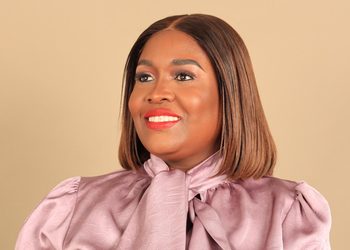
*Hilda is a business leader, public speaker and a seasoned broadcast journalist. Founder of the national brand and organisation Team Namibia, Hilda believes her purpose is to impact the world with kindness, one engagement at a time