Wednesday, October 28, 2026
Subscribe
The Brief | Namibia's Leading Business & Financial News
  • Home
  • Companies
    • Finance
    • Agriculture
    • Technology
    • Property
    • Trade
    • Tourism
  • Business & Economy
  • E-PAPERreader
  • Mining & Energy
  • Opinions
    • Analysis
    • Columnists
  • Africa
No Result
View All Result
The Brief | Namibia's Leading Business & Financial News
Subscribe
No Result
View All Result
Home Companies Agriculture

Namibia’s sheep marketing plunges 40%

by reporter
October 28, 2026
in Agriculture
5
A A

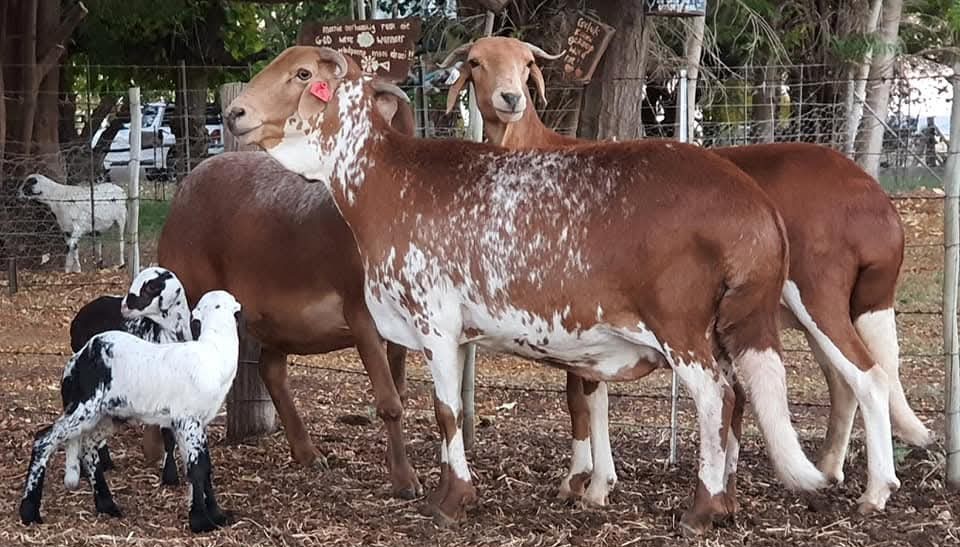
Namibia’s sheep marketing declined by 39.86% month-on-month to 33,565 animals in September 2026, as foot-and-mouth disease (FMD) restrictions in the //Kharas Region disrupted livestock movements and trade, according to the Livestock and Livestock Products Board (LLPB).

The Board’s October 2026 Mutton and Chevon Market Watch report shows that sheep marketing fell from 55,814 animals in August, although volumes remained 7.91% higher than the 31,104 recorded in September 2025.

The decline followed the confirmation of an FMD outbreak in the //Kharas Region on 23 September, which triggered restrictions on the movement and trade of cloven-hoofed animals during the final eight days of the month.

Live sheep exports, which accounted for 84.35% of total marketing, fell by 39.45% month-on-month to 28,311 animals. South Africa remained the dominant export destination, accounting for 98.09% of live sheep exports.

Despite the monthly contraction, live exports were 57.34% higher than in September 2025.

“Total sheep marketing in September 2026 was 7.91% higher than in September 2025, at 33,565 head compared with 31,104 head. The increase came from live exports, which were 57.34% higher at 28,311 head, while export abattoir and B&C slaughter were 68.72% and 54.93% lower, at 1,486 head and 3,768 head,” the report stated.

Export abattoir slaughter increased by 82.56% compared with August but remained 68.72% below September 2025 levels.

B&C abattoir slaughter declined by 54.31% month-on-month and 54.93% year-on-year to 3,768 animals.

Despite the September slowdown, Namibia marketed 611,407 sheep during the first nine months of 2026, representing a 39.15% increase compared with the corresponding period last year.

The year-to-date growth was largely driven by a 55.98% increase in live sheep exports.

Meanwhile, producer prices recorded mixed movements during September, with the A2 sheep price increasing by 3.37% month-on-month to N$95.95 per kilogram, up 12.18% year-on-year.

The C2 price declined by 1.07% month-on-month to N$61.94 per kilogram but remained 21.26% above its September 2025 level.

The average carcass price across all grades fell by 3.63% to N$65.90 per kilogram, although it was 16.31% higher than a year earlier.

The Board attributed part of the annual price increases to unusually low producer prices recorded in September 2025.

The goat market also came under pressure, with total marketing declining by 13.44% month-on-month and 28.26% year-on-year to 9,975 animals.

Cumulative goat marketing reached 85,476 animals during the first nine months of 2026, representing a 6.48% decline compared with the same period last year.

The Board warned that small-stock marketing was expected to remain below normal levels in October as FMD restrictions continued to affect livestock movements and exports from the //Kharas Region.

As of 15 October, 131 animals had tested positive for FMD across 18 farms in the Karasburg Veterinary District.

“Small-stock marketing is therefore expected to remain below normal levels in October. Live exports from the //Kharas Region, an important small-stock producing area, remain excluded, and export abattoir capacity for sheep is now limited to Natural Namibian Meat Producers following the closure of Farmers Meat Mariental,” the report stated.

The Board said the extent of the expected decline would depend on South Africa’s import conditions for live sheep and goats, as well as the number of animals meeting slaughter requirements.

Live exports from other parts of Namibia remain permitted, subject to the import requirements of South Africa and other destination markets.

However, the closure of Farmers Meat Mariental has further reduced export slaughter capacity, adding pressure to an industry already facing livestock movement restrictions.

The Board has suspended its usual statistical forecasts because the models assume normal trading conditions, which no longer apply following the outbreak.

author avatar
reporter
See Full Bio
Previous Post

Keeping the grid in public hands: The case against privatising Namibia’s electricity transmission and distribution

Must Read

Rows of hanging carcasses in a meat processing facility, suspended from rails along a long aisle.
Agriculture

Namibia’s pig slaughter hits four-year low as FMD restrictions disrupt market

October 27, 2026
Professional headshot of a smiling woman in a black blazer and white shirt, against a light gray background.
Agriculture

Fighting FMD without losing our livestock industry

October 27, 2026
Group of cows standing in a grassy field under a cloudy sky.
Agriculture

Namibia markets 217,000 cattle in first nine months

October 26, 2026
Award ceremony scene: two men shake hands as a woman presents a large check from the Livestock and Livestock Products Board of Namibia, with a banner behind them.
Agriculture

LLPB to recruit 36 veterinary graduates for internship programme

October 23, 2026
Worker in protective gear inspecting hanging beef carcasses in a meat processing plant. (PPE: white suit, yellow helmet, mask)
Agriculture

Meatco to temporarily resume slaughtering for local market

October 23, 2026
Three vertical banners outside a modern white building; left banner is dark with a logo, center banner has green vertical text, right banner reads 'EOS CAPITAL' with a QR code.
Agriculture

Eos Capital partially exits Kadila Poultry investment with 19% return

October 22, 2026
Load More

Related News

Cultivating careers through financial planning in Namibia

Cultivating careers through financial planning in Namibia

July 3, 2024
Shell confirms fourth oil discovery offshore Namibia

Shell confirms fourth oil discovery offshore Namibia

July 13, 2023
BoN ponders legislation review to accommodate digital currencies

BoN ponders legislation review to accommodate digital currencies

September 22, 2022

Browse by Category

  • Africa
  • Agriculture
  • Analysis
  • Business & Economy
  • Columnists
  • Companies
  • e-edition
  • Finance
  • Finance
  • Fisheries
  • Green Hydrogen
  • Health
  • Investing
  • Latest
  • Market
  • Mining & Energy
  • namibia
  • Namibia
  • News
  • Opinions
  • Property
  • Retail
  • Technology
  • Tourism
  • Trade
The Brief | Namibia's Leading Business & Financial News

The Brief is Namibia's leading daily business, finance and economic news publication.

CATEGORIES

  • Business & Economy
  • Companies
    • Agriculture
    • Finance
    • Fisheries
    • Health
    • Property
    • Retail
    • Technology
    • Tourism
    • Trade
  • e-edition
  • Finance
  • Green Hydrogen
  • Investing
  • Latest
  • Market
  • Mining & Energy
  • namibia
  • News
    • Africa
    • Namibia
  • Opinions
    • Analysis
    • Columnists

CONTACT US

Cell: +264814612969

Email: newsdesk@thebrief.com.na

© 2026 The Brief | All Rights Reserved. Namibian Business News, Current Affairs, Analysis and Commentary

Welcome Back!

Login to your account below

Forgotten Password?

Retrieve your password

Please enter your username or email address to reset your password.

Log In
No Result
View All Result
  • Home
  • Companies
  • Mining & Energy
  • Business & Economy
  • Opinions
    • Analysis
    • Columnists
  • Africa

© 2026 The Brief | All Rights Reserved. Namibian Business News, Current Affairs, Analysis and Commentary

This website uses cookies. By continuing to use this website you are giving consent to cookies being used. Visit our Privacy and Cookie Policy.