By Stephanie M. De Klerk
Namibia’s Foot-and-Mouth Disease (FMD) outbreak presents a challenge extending well beyond animal health.
It threatens the economic relationships that sustain livestock production, meat processing, rural livelihoods and international trade.
The immediate imperative is disease containment, but the national response must also preserve the productive capacity and commercial networks upon which the industry’s recovery depends.
The central policy challenge is to achieve an appropriate balance between veterinary risk management and economic continuity. These are not competing objectives.
Effective disease control protects future market access while carefully managed commercial activity, where permitted, helps prevent temporary restrictions from causing lasting economic damage.
Namibia must avoid emerging from this crisis with the disease contained but its livestock economy structurally weakened.
The economic cost of disrupted market access
Livestock production operates within an interconnected value chain. Producers require predictable market access to meet operating expenses and maintain herds.
Abattoirs depend on throughput and product realisation to cover substantial fixed costs. Transporters, feed suppliers, processors, retailers and service providers depend on sustained commercial activity.
A prolonged interruption affects each participant differently but ultimately weakens the entire system. For small-scale and communal producers, constrained market access can be particularly damaging, given limited financial reserves and fewer alternative marketing channels.
The consequences extend to employment, household incomes and rural economic activity.
These effects must be considered alongside veterinary imperatives when assessing the broader impact of the outbreak.
Veterinary integrity and managed continuity
Namibia’s access to demanding international markets rests on decades of investment in veterinary governance, disease surveillance, traceability and regulatory credibility. These achievements must not be compromised.
The Directorate of Veterinary Services (DVS), as the Competent Authority, must retain scientific and regulatory leadership over disease containment and the conditions under which livestock movements, slaughter and processing may occur.
However, veterinary controls and economic continuity can be pursued together through risk-based arrangements consistent with applicable protocols.
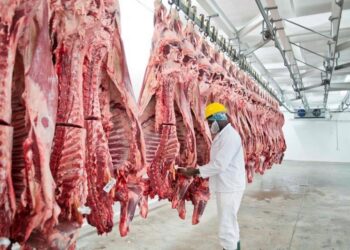
Meatco’s temporary slaughter arrangements involving cattle already owned by the Corporation illustrate the limited commercial activity possible under veterinary supervision. Such operations support domestic supply but do not constitute commercial recovery.
The broader objective should be to identify safe, legally permissible pathways that maintain producer participation and essential processing capacity without undermining disease containment.
Domestic demand and the economics of processing
The disruption has reinforced the importance of Namibia’s domestic beef market.
Retailers, wholesalers, hospitality operators and public institutions can contribute through greater procurement of locally produced beef.
Structured purchasing arrangements, particularly within public-sector food programmes, could provide more predictable demand during periods of market disruption.
Yet domestic demand cannot simply replace premium export markets.
Prices realised locally are generally substantially lower than those achieved in established high-value export destinations. Processing facilities also carry significant fixed costs, making throughput alone an inadequate measure of financial sustainability.
Commercial viability depends on the relationship between livestock procurement costs, processing efficiency, product value and market realisation.
The objective must therefore extend beyond keeping abattoirs operational to ensuring that their activities remain economically sustainable.
Diversifying towards Africa and the Middle East
Namibia’s reliance on a relatively concentrated portfolio of premium export markets creates exposure when veterinary restrictions interrupt trade.
Restoring access to established destinations remains essential. Equally important is developing a more diversified commercial presence across Africa and the Middle East.
African markets offer opportunities for regional trade, distribution partnerships and differentiated product offerings. Middle Eastern markets present further potential, particularly where Namibian beef can meet specific consumer preferences, certification standards and importing-country requirements.
However, market diversification requires more than identifying prospective buyers. Veterinary equivalence, import permits, product specifications, logistics, commercial relationships and price competitiveness must align.
FMD restrictions may also affect access to prospective alternative destinations. Market activation must therefore proceed through appropriate veterinary approvals and coordinated commercial diplomacy.
Government and industry should jointly prioritise markets with realistic prospects for regulatory approval and commercially sustainable trade.
Diversification should become a permanent feature of Namibia’s red meat strategy rather than an emergency response to lost access elsewhere.
Preserving employment and productive capacity
Employment protection is inseparable from commercial viability.
Producers, processors and associated businesses cannot indefinitely sustain existing cost structures without sufficient revenue. Prolonged disruption may require expenditure restraint, operational adjustments and difficult labour-related decisions.
Such measures should be guided by consultation, proportionality and a commitment to preserving essential productive capacity.
Organised labour has an important role in developing workable arrangements that balance immediate income protection with longer-term employment sustainability.
Government and financial institutions should also consider targeted interventions where temporary support can prevent otherwise viable operations from suffering irreversible damage.
The objective must be to safeguard the greatest possible number of sustainable jobs across the value chain, rather than preserve individual operations at costs that cannot be financed.
A coordinated national response
The current circumstances warrant a coordinated livestock continuity framework alongside the veterinary response.
Such a framework should integrate disease surveillance, risk-based commercial arrangements, domestic procurement, targeted liquidity support and accelerated engagement with eligible African and Middle Eastern markets.
It should also accommodate the distinct circumstances of commercial and communal producers while ensuring that veterinary decisions remain evidence-based and transparent.
No institution can independently resolve a crisis of this complexity. Effective implementation requires cooperation among veterinary authorities, Government, producers, processors, retailers, financial institutions and organised labour.
Namibia cannot predict precisely when normal market access will be restored. It can, however, make deliberate choices about preserving the industry’s capacity to recover.
The measure of our response will not be disease containment alone, but whether we also retain viable producers, functioning processing infrastructure, sustainable employment and credible access to markets.
Protecting animal health and preserving economic livelihoods must remain part of the same national undertaking.
Stephanie M. De Klerk is Deputy Chairperson of the Board of the Meat Corporation of Namibia (Meatco) and writes in that capacity.