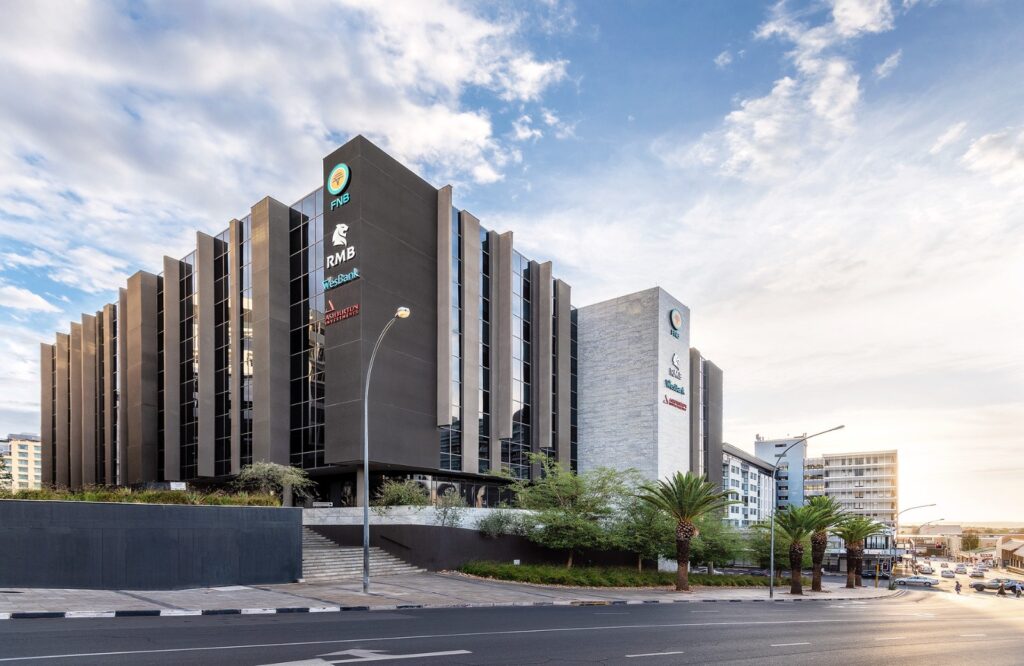
FNB Namibia has warned that the government’s increasing reliance on domestic borrowing could limit access to credit for businesses and households, potentially slowing private-sector investment and economic growth.
In its analysis of the 2026/27 Mid-Year Budget Review, FNB said the government’s total financing requirement is projected at N$22.1 billion, of which N$21.1 billion, or 95.2%, is expected to be raised domestically.
The bank warned that heavy government borrowing from local financial institutions and investors could reduce the funds available for lending to businesses and households while pushing up borrowing costs.
“Dependence on local funding creates a risk of tighter market liquidity and private credit crowding out: banks and institutional investors allocating more capacity to government securities may have less room for firms and households or require higher lending margins,” FNB said.
The bank said this could discourage private-sector investment and weaken economic growth, making it more difficult for the government to increase revenue and improve its debt position.
According to the analysis, external project financing has been reduced to N$1.1 billion due to delays in implementing water and transport infrastructure projects.
The government’s financing requirement includes a revised budget deficit of N$16.3 billion, a N$4.6 billion cash requirement and N$1.9 billion in foreign debt repayments, partly offset by a N$600 million sinking-fund contribution.
Meanwhile, government debt is projected to increase to N$201.7 billion by the end of the 2026/27 financial year, equivalent to 68.7% of gross domestic product (GDP). This is higher than the N$193.8 billion projected in the main budget.
The budget deficit has also increased by N$519 million from the original N$15.8 billion estimate, although it remains at 5.5% of GDP following an upward revision to the country’s nominal GDP.
Government revenue has been revised down by N$1.5 billion to N$88 billion, while expenditure is expected to decline by 0.9% to N$105 billion.
FNB also raised concerns about Namibia’s weaker economic outlook, with the government’s growth forecast for 2026 reduced from 3.1% to 2.3%, while the 2027 forecast was lowered from 3.3% to 2.6%.
The bank attributed the downward revisions to weaker economic performance during the first half of the year, lower production by key industries, disruptions linked to the Middle East conflict and the impact of foot-and-mouth disease (FMD).
“Namibia’s real GDP growth forecast has been lowered to 2.3% in 2026 from 3.1% in the Main Budget, and to 2.6% in 2027 from 3.3%. This follows actual growth of 1.7% in 2025,” the analysis stated.
FNB said slower economic growth could make it harder for the government to generate sufficient revenue to meet its spending and debt obligations.
Although government interest payments have been revised down to N$15.4 billion, they remain 9% higher than in the previous financial year and are expected to consume 17.5% of government revenue.
The bank noted that higher collections from personal and corporate income taxes, as well as Southern African Customs Union (SACU) receipts, could provide some relief to public finances.
It said uranium production and existing mining operations could support government revenue in the near term, while significant contributions from new gold projects are expected mainly from 2028 onwards.
However, FNB cautioned that higher revenue collections might not be enough to ease pressure on the budget if government spending continues to increase.
The bank warned that continued dependence on domestic borrowing, together with rising debt repayments and recurring cash requirements, could place further pressure on Namibia’s public finances.
FNB called for a broader mix of domestic and external financing, alongside spending that supports productive economic activity, to reduce pressure on local savings and improve the country’s credit outlook.