Former Mines and Energy Minister Tom Alweendo has warned that weak financial oversight, poor investment decisions and a lack of accountability could undermine Namibia’s economic growth, calling on accountants to play a stronger role in preventing financial losses and ensuring that investments deliver measurable results.
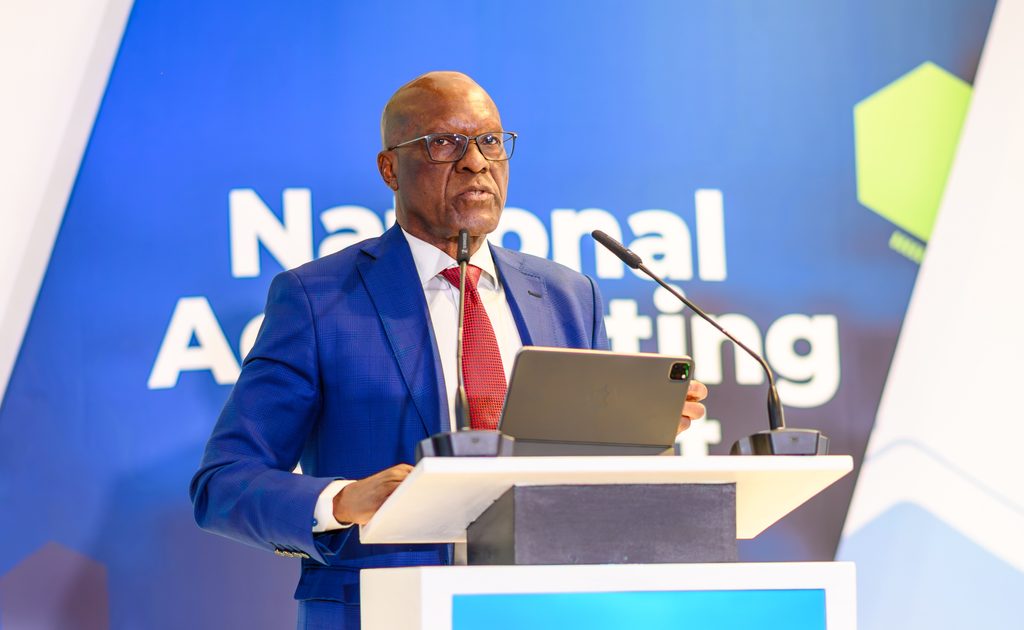
Speaking at the Institute of Chartered Accountants of Namibia (ICAN) National Accounting Summit, Alweendo said the accounting profession must move beyond financial reporting and compliance to help businesses and public institutions make sound investment decisions, manage risks and improve economic performance.
He said Namibia could not afford ineffective institutions and poor implementation at a time when economic growth remained subdued and unemployment stood at 34.1%.
Citing economic growth projections of 1.7% and 2.1%, followed by an anticipated improvement to 2.8%, Alweendo said stronger financial management and institutional accountability were necessary to translate investment into economic activity and employment.
He challenged accountants to identify financial risks before resources were lost, warning that reporting failures after they occurred was insufficient to protect investments and support economic development.
“Did the control work? Is the project financially sustainable? And who carries the downside if the assumption fails?” he asked.
Alweendo said accountants should assess whether financial controls were effective, whether projects were commercially viable and whether investment assumptions were realistic.
He cautioned that financial prudence should not become an obstacle to economic development, arguing that accountants must distinguish between responsible investment and reckless financial decisions.
“The task is not to abandon prudence, but to apply prudence to the future, not to the past,” he said.
Alweendo also criticised the tendency of public institutions to measure success through project announcements and launches rather than completed investments and tangible economic benefits.
He said effective leadership required sound judgement, accountability and the ability to deliver on commitments.
“Good intentions cannot compensate for weak judgement or poor execution,” he said.
Turning to Namibia’s economic challenges, Alweendo warned that mineral discoveries and investment conferences would not automatically create jobs or stimulate industrial development.
“As I always say, a mineral discovery does not sign an employment contract,” he said, adding that investment conferences did not build factories.
He called for collective responsibility from government, businesses and professionals to address unemployment and weak economic growth, stressing that economic transformation required more than policy commitments and investment announcements.
Alweendo, who is also the founder of Alvenco Energy and former Director General of the National Planning Commission, identified credible leadership, effective institutions and individual accountability as critical to achieving sustainable economic growth.
“An institution without people who take responsibility becomes mere offices, rules and budgets that produce activities, but there is little result,” he said.
He further urged accountants to support small and growing businesses by improving financial reporting, governance and internal controls to strengthen their access to financing.
Alweendo said unreliable financial records made it difficult for businesses to secure loans and attract investors, limiting their ability to expand operations and create employment.
He also warned that corruption, misleading financial information and the evasion of tax obligations undermined investor confidence and increased the cost of doing business.
According to Alweendo, ethical conduct and transparent financial reporting were essential to building trust among investors, lenders, businesses and employees.
He urged accounting professionals to maintain their independence, particularly when financial findings conflicted with the interests of senior executives or board members.
Alweendo cautioned that accountants who prioritised maintaining relationships with decision-makers over providing objective advice risked undermining their professional credibility.
“The profession will always agree and may remain in the room because you always agree. But eventually, you cease to matter to those in the room because you don’t really matter,” he said.
He said Namibia’s economic transformation would depend on stronger institutions, responsible investment decisions and greater accountability in the management of financial resources.
“Our future will not be delivered by someone. It can only be built by all of us and in doing so together,” Alweendo said.