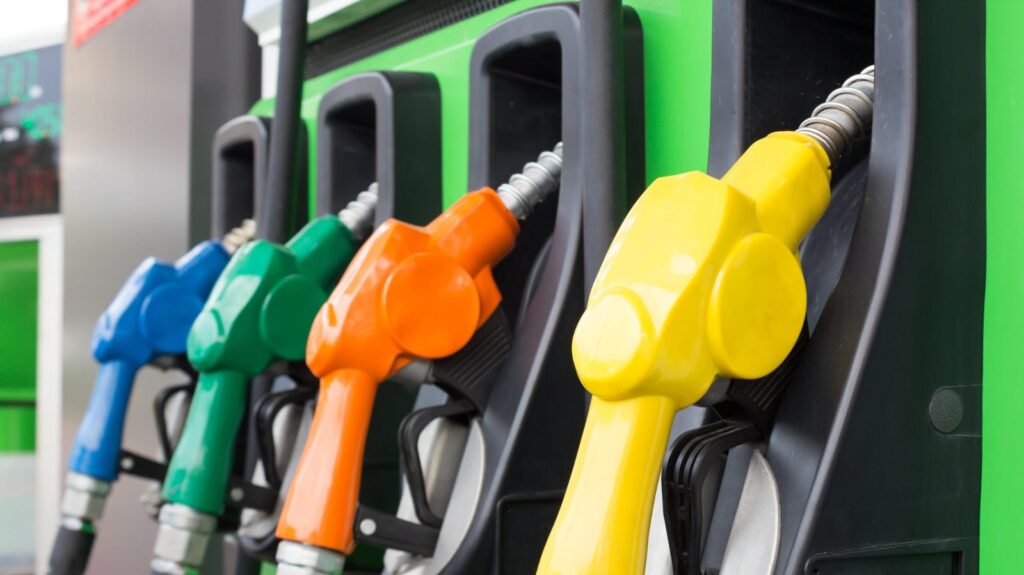
Namibian motorists will pay N$1.50 more per litre for petrol from 7 October 2026, pushing the Walvis Bay pump price of unleaded petrol 95 to N$26.58 per litre, while diesel prices will remain unchanged.
Minister of Industries, Mines and Energy Modestus Amutse said diesel 50 ppm will remain at N$27.86 per litre and diesel 10 ppm at N$27.96 per litre at Walvis Bay, with prices elsewhere in the country adjusted accordingly.
“Based on the recorded under-recoveries, the Ministry has resolved to adjust the pump price of unleaded petrol 95 by N$1.50 per litre, while keeping the prices of both diesel grades unchanged,” Amutse said.
The petrol increase comes after the Ministry recorded a provisional under-recovery of 379.64 cents per litre as at 25 September. Diesel 50 ppm recorded an under-recovery of 358.41 cents per litre, while diesel 10 ppm stood at 357.59 cents per litre.
Despite the substantial diesel under-recoveries, the government opted to keep diesel prices unchanged to limit the impact of higher fuel costs on industries and producers.
The Ministry attributed the under-recoveries to rising international petroleum prices, higher shipping costs and a weaker Namibian dollar against the US dollar.
It said international oil markets remained volatile during the review period due to geopolitical tensions, disruptions to Middle Eastern supplies, attacks on oil infrastructure and constraints on crude oil flows through the Strait of Hormuz.
The average international price of petrol 95 increased by 19.27% during the review period, from 124.39 US cents per litre in August to 148.36 US cents per litre in September.
Diesel prices also rose sharply, with diesel 50 ppm increasing by 13.60% from US$160.58 per barrel in August to US$182.41 per barrel in September. Diesel 10 ppm increased by 13.52% from US$161.48 per barrel to US$183.23 per barrel over the same period.
The Ministry said Namibia continues to have adequate fuel stocks and that the national fuel supply chain remains stable, with no immediate risk of shortages.
It said measures implemented through the National Energy Fund and the Petroleum Import Coordination Mechanism have helped cushion consumers against international oil price shocks.