Dangote Industries plans to launch a 2,620 to 2,650-kilometre fuel pipeline network in October, starting in Namibia and extending through Botswana, South Africa, Zimbabwe and Zambia to the Democratic Republic of Congo (DRC).
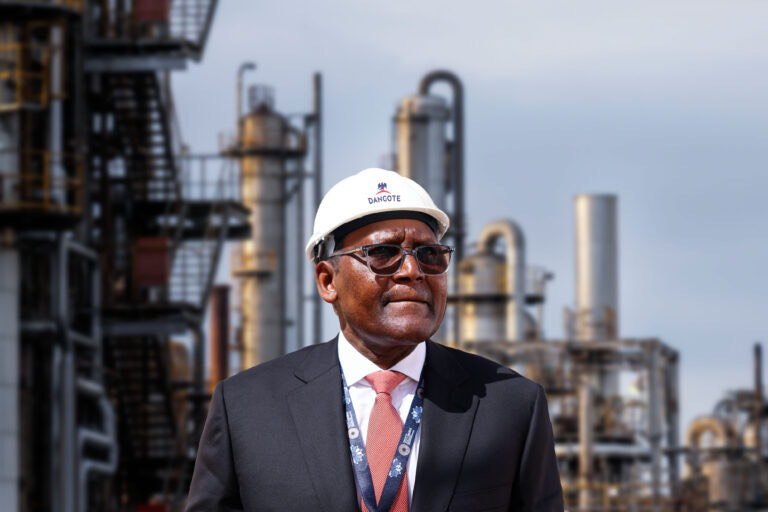
Dangote Group Chairman Aliko Dangote said the planned network would start in Namibia and run through Botswana into South Africa, with another line extending through Zimbabwe and Zambia to the DRC.
“So sometime in October we’re also launching a pipeline that is 2,620 or 2,650 kilometres, starting from Namibia. From Namibia we’ll take it to Botswana, Botswana into the other side of South Africa, and we’re also taking up another line which will now go to Zimbabwe. From Zimbabwe it will go to Zambia. From Zambia it will go to the DRC,” Dangote said.
The announcement comes as Dangote Industries Namibia (Pty) Ltd is proposing the construction and operation of a petroleum storage terminal at Walvis Bay, which could provide infrastructure to support the group’s planned regional fuel distribution network.
According to a public notice issued as part of the Environmental Impact Assessment (EIA) process, the company proposes developing the terminal on 678,912 square metres of industrial land on Farm 58 in Walvis Bay, about 10 kilometres east of the town centre and six kilometres north of Walvis Bay International Airport.
The proposed terminal is intended to increase Namibia’s strategic petroleum storage capacity and strengthen fuel security while positioning Walvis Bay as a petroleum storage and logistics hub serving neighbouring Southern African Development Community (SADC) markets, particularly landlocked countries.
Dangote disclosed the pipeline plans during the formal opening of the initial public offering (IPO) of Dangote Petroleum Refinery and Petrochemicals on the Nigerian Exchange.
He said the infrastructure forms part of the group’s broader African expansion and is intended to support the distribution of petroleum products across the continent.
Dangote also announced plans for additional energy infrastructure in East Africa, including a port, tank farms and a long-distance pipeline from Somalia to Ethiopia aimed at strengthening energy security in the two countries.
The planned Southern African pipeline comes as Dangote Petroleum Refinery expands its focus on regional and international markets.
Dangote said the refinery had sold out its jet fuel production for August and September, excluding volumes reserved for the Nigerian market, and was supplying jet fuel to Europe.
“Dangote Petroleum Refining is a world-class industrial asset. It is the largest refinery in the continent of Africa and well on its way to becoming the largest in the world. Built to international standards and equipped with modern technology, it is also the only large-scale operational refinery currently supplying Nigeria’s domestic market at a scale while also serving other African markets and international markets,” he said.
The group is also moving ahead with plans to expand the refinery to a capacity of 1.4 million barrels per day and increase petrochemical production.
Dangote said the group plans to produce 2.5 million tonnes of polypropylene annually and develop a 400,000-tonne linear alkyl benzene plant in Nigeria. Linear alkyl benzene is a raw material used in detergent manufacturing.
The projects form part of Dangote Group’s planned investment pipeline of about US$46 billion, approximately N$753 billion, through 2030.
Dangote said the group has sufficient funding for its expansion plans and that the refinery’s IPO is primarily intended to broaden ownership rather than raise capital for the projects.
The company initially targeted US$2.5 billion through a US$1 billion private placement and a US$1.5 billion IPO. Dangote said demand for the private placement exceeded the available allocation.
He said the IPO would allow ordinary investors in Africa and elsewhere to acquire shares in the refinery.
Dangote also indicated that Dangote Petroleum Refinery could pursue a listing outside Africa, potentially in the United States, within the next three to four years.