Namibia is estimated to lose N$16.7 billion annually through illicit financial flows (IFFs), equivalent to about 9% of nominal Gross Domestic Product (GDP), according to the country’s first comprehensive national assessment of money illegally moved into or out of the economy.
Cabinet has approved the publication of Namibia’s inaugural IFF estimates and their submission to the United Nations Statistics Division for reporting.
The assessment, compiled by a 14-agency Technical Working Group chaired by the Bank of Namibia, found that tens of billions of Namibia dollars have moved illicitly through the economy in recent years, depriving the country of resources that could otherwise support healthcare, education, infrastructure and other public services.
Using the United Nations Conference on Trade and Development’s Partner Country Method Plus methodology, the report estimates illicit financial flows at N$16.7 billion annually over the 2021-2022 period.
Government said the losses represented about 9% of Namibia’s nominal GDP and showed that the country had lost an opportunity to collect an estimated N$2.7 billion in tax revenue over the two years.
The assessment identifies trade misinvoicing as one of the major channels through which illicit funds are moved across borders.
This includes overpricing imports to move money out of Namibia, underpricing imports to evade duties and value-added tax, and manipulating export prices to conceal earnings or move undeclared funds into the country.
Government said companies and individuals can mislabel goods, overprice products to claim subsidies or inflate costs to reduce tax liabilities, while export earnings can also go undeclared, resulting in foreign currency not being repatriated to Namibia.
The findings come as government seeks to cut illicit financial flows from an estimated 9% of GDP to 5% by 2030 under the Sixth National Development Plan.
Authorities have been working to quantify and curb illicit flows since 2018, with technical assistance from UNCTAD and participation from 14 government institutions and agencies.
The assessment has already contributed to enforcement and revenue recovery efforts, according to the Ministry of Finance.
Authorities recovered N$28 million in taxes exceeding N$28 million for the State during 2025 following coordinated investigations.
In 2026, a single investigation resulted in the recovery of more than N$45 million.
Government has also strengthened several laws since 2023 to tackle trade-related money laundering and illicit financial flows, including the Financial Intelligence Act, Prevention of Organised Crime Amendment Act, Virtual Assets Act, Payment Systems Management Act and Banking Institutions Act.
Tax rules have also been tightened to close loopholes that previously allowed money to leave Namibia untaxed, while investigators and prosecutors have received additional training and resources to pursue complex cases and recover proceeds of crime.
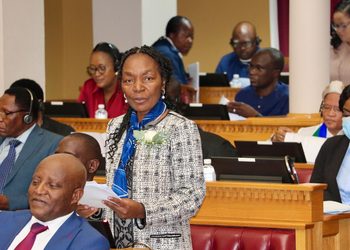
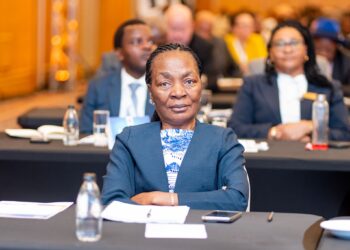
Finance Minister Ericah Shafudah said tackling illicit financial flows was critical to protecting resources needed for public investment and economic development.
“Namibia’s development aspirations depend on our ability to prevent and reduce illicit financial flows. These flows diminish the resources available for public investment, service delivery, and economic growth,” Shafudah said.
She said the issue is becoming increasingly important as Namibia positions itself as a future exporter of renewable energy, green hydrogen and petroleum products.
“Protecting the country’s financial system from illicitly acquired or transferred funds, thus remains a strategic national priority,” she said.
The government said its response will focus on four areas: strengthening policy and legislation, improving institutional capacity and governance, strengthening data management and transparency, and stepping up enforcement, prosecution and revenue recovery.
The Ministry of Finance said the findings will be used by authorities to guide enforcement, compliance and revenue recovery efforts and identify sectors, commodities and trading activities most vulnerable to illicit financial flows.