Meat Corporation of Namibia (Meatco) revenue surged 56% year-on-year to N$793.2 million by 31 July 2026, driven by higher cattle slaughter volumes, improved procurement and stronger export market returns as the state-owned meat processor implements its turnaround programme.
The company recorded a gross profit of N$106 million during the period, up sharply from N$2.27 million in the corresponding period last year, while revenue also came in above budget.
Slaughter throughput increased by approximately 55% year-on-year, supported by improved cattle procurement, stronger export market realisations, operational efficiencies and continued cost management.
Meatco slaughtered more than 34,000 cattle from areas south of the Veterinary Cordon Fence (SVCF) and the Northern Communal Areas (NCA) by the end of July, compared with 24,405 cattle during the same period last year.
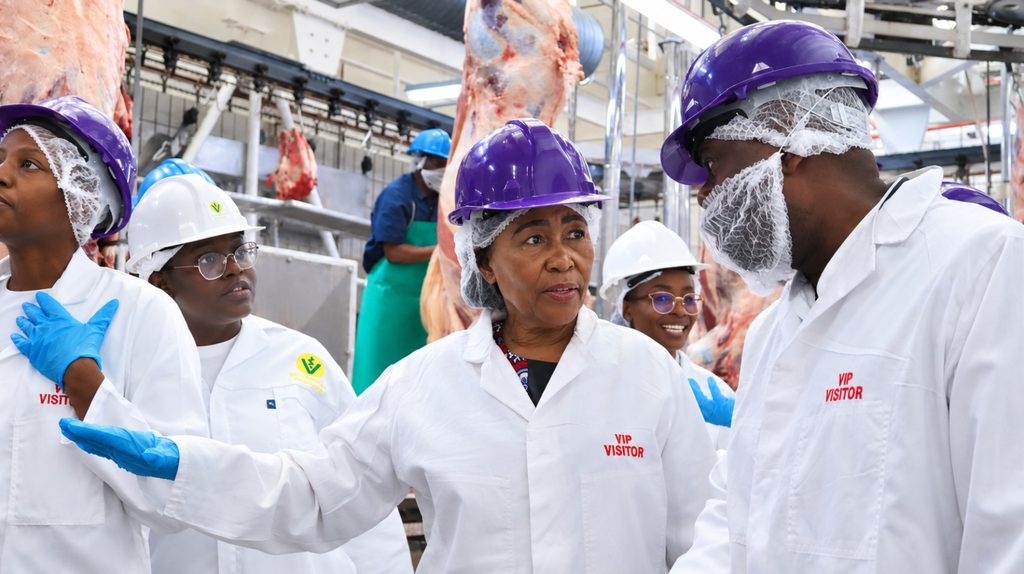
The performance figures were presented to Agriculture, Fisheries, Water and Land Reform Minister Inge Zaamwani during a working visit to Meatco’s Windhoek operations on Wednesday.
Despite the improved performance, Meatco said challenges remain around cash generation, securing sustainable cattle supplies and improving operational efficiency across the group.
Interim Chief Executive Officer Albertus Aochamub said the company now needs to convert gains under the turnaround programme into a sustainable commercial recovery.
“The progress we are seeing demonstrates that Meatco can recover and compete when we maintain commercial discipline, secure livestock supply and maximise the value of our market access,” Aochamub said.
“Our task now is to consolidate these gains while addressing the structural challenges that remain, particularly in the NCA.”
Zaamwani said sustaining and expanding Meatco’s slaughter volumes would depend heavily on farmers supplying sufficient cattle to the processor.
“Meatco cannot be successful without sufficient supply from farmers. However, we understand that there are currently constraints in the supply chain, as farmers are rebuilding their herds and want to ensure that, when they supply, the animals meet the required slaughter weight,” she said.
“But we can do more, provided we get more throughput.”
Zaamwani said the government was encouraged by activity at the Windhoek facility and urged Meatco to maintain its daily slaughter capacity and expand throughput as livestock availability improves.
She also called for greater market access for livestock producers, particularly farmers in the NCA, saying interventions were needed across both production and processing.
The Minister said Meatco’s operations would need to comply with requirements in its export markets and welcomed the company’s traceability system, which tracks carcasses from the supplying farm through processing, freezing and export.
“It is really a state-of-the-art process that is taking place there, and we obviously have to comply with all our markets’ requirements,” Zaamwani said.
Her comments come as Meatco works to strengthen cattle procurement and secure sustainable livestock supplies as part of its turnaround strategy.
Zaamwani said the livestock sub-sector remains an important contributor to Namibia’s economy and called for closer cooperation between farmers, processors and other industry stakeholders.
She said her visit was also aimed at resolving outstanding operational matters between the Ministry and Meatco and accelerating agreed interventions.
“My team and I are visiting Meatco today (Wednesday) to fast-track any outstanding operational matters requiring the Corporation’s and Ministry’s attention,” Zaamwani said.
“We also want to strengthen coordination and ensure that agreed actions are implemented efficiently and without further delay for the benefit of the producers and the country.”