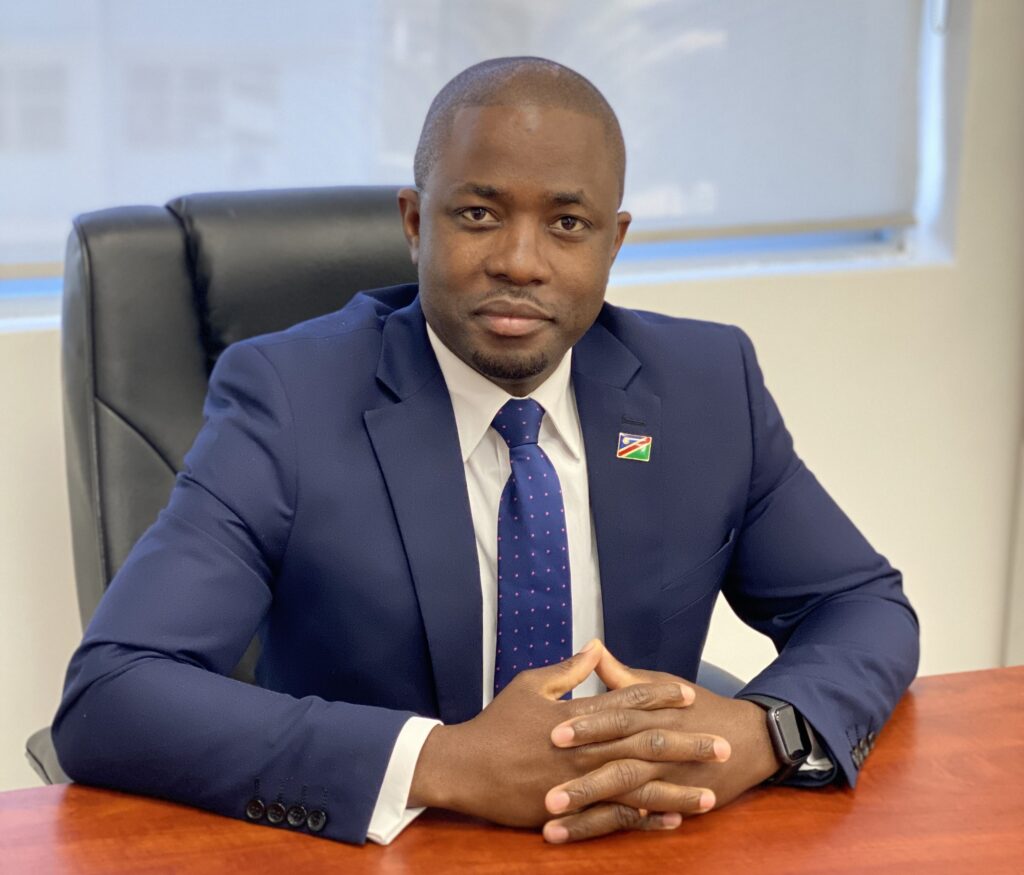
By Lot Ndamanomhata
A Fund Born From a Historic Discovery
In February 2022, TotalEnergies announced a major offshore oil discovery in Namibia’s Orange Basin, followed weeks later by a second significant find from Shell.
Together, the discoveries put Namibia – long known for diamonds, uranium, and gold – on the map as a potential new oil producer.
President Hage Geingob’s government moved quickly to make sure the windfall would not be squandered. On 12 May 2022, in Windhoek, Geingob officially launched the Welwitschia Fund, Namibia’s first sovereign wealth fund, named after the country’s iconic, centuries-old desert plant – a symbol chosen deliberately to represent resilience and multi-generational endurance.
The fund launched with a modest initial injection of N$262 million (about US$16.3 million), a deliberately small opening balance for what was designed to become a much larger, long-term store of national wealth.
Geingob was candid about the fund’s purpose from day one: to convert a temporary windfall from finite natural resources – oil, gas, and green hydrogen – into a permanent asset that would outlast the resources themselves, while also directing a portion of the fund toward closing Namibia’s domestic infrastructure gap.
How the Fund Is Built
The Welwitschia Fund is designed to collect a share of mineral royalties, a portion of resource-linked tax revenue, and proceeds from government divestment of certain investment holdings.
Under its founding design, the fund allocates a small share – around 2.5% of its portfolio – toward domestic infrastructure investment, while the remainder is intended for longer-term savings, following the broader pattern used by other resource-based sovereign funds worldwide.
Progress So Far: Small, but Compounding Steadily
Four years on, the Welwitschia Fund remains modest in absolute terms, but it now has a real, documented growth track record.
According to the Bank of Namibia, the fund reached approximately N$478.7 million (about US$30.09 million) as of 28 February 2026, and had grown further to N$508.47 million (about US$30.85 million) by August 2026.
Bank of Namibia Governor Ebson Uanguta disclosed the latest figures in a presentation titled ‘Building Wealth Beyond Natural Resources: Creating Namibia’s Next Growth Story’, describing the fund as ‘a mechanism for converting resource wealth into longer-term financial wealth.’
The Growth Trajectory
The Bank of Namibia has also disclosed the fund’s investment performance directly: since the current investment strategy began in November 2022, the fund has delivered an annualised return of 16.28% (through February 2026), moderating slightly to about 15.5% on an annualised basis by August 2026.
Both figures substantially outperform the fund’s benchmark — the US core personal consumption expenditure index plus 3% — which returned only 6.3% over the comparable period.
The central bank has described the fund as continuing to perform robustly even amid global market volatility, including corrections linked to conflict in the Gulf region.
Governance: From Administrative Arrangement to Law
Since 2022, the Welwitschia Fund has operated administratively under the Bank of Namibia, without a dedicated act of Parliament.
That is now changing. In her second State of the Nation Address in April 2026, President Netumbo Nandi-Ndaitwah announced that enabling legislation – the Sovereign Wealth Fund of Namibia Bill – was at an advanced stage and would be tabled in Parliament in due course.
Governor Uanguta later confirmed the bill was undergoing statutory approval and was expected to reach Parliament before the end of 2026.
Once passed, the legislation is expected to give the fund a permanent legal framework covering its investment mandate, withdrawal rules, and governance arrangements, and to align it with international transparency benchmarks such as the Santiago Principles – the same voluntary standards Botswana’s Pula Fund adopted in 2008.
The Bank of Namibia has also outlined the fund’s internal structure: it is split into two accounts. The Intergenerational Savings Account is intended to build long-term wealth for future Namibians, with the underlying capital protected – withdrawals are limited strictly to investment returns, capped at no more than 10% of accumulated returns in any given year.
The Stabilisation Account is a shorter-term liquidity buffer intended to support the national budget during commodity price shocks or revenue shortfalls, with withdrawals capped at 10% of total account assets annually and only permitted when specified fiscal conditions are met.
Both accounts are administered by the Bank of Namibia under the oversight of the Ministry of Finance. About 2.5% of the intergenerational account is earmarked for domestic infrastructure projects with long-term socio-economic benefit.
The fund’s founding leadership is also part of its story. It was launched under President Hage Geingob, with former Bank of Namibia governor Johannes !Gawaxab and former finance minister Ipumbu Shiimi playing key roles in its design.
Leadership has since passed to President Nandi-Ndaitwah, Minister Ericah Paendelenga Shafudah and Governor Uanguta, who now oversee the fund as it moves from an administrative arrangement into a permanent legal institution.
What the Fund Means for Namibia and Future Generations
- A buffer against volatility: diamonds, uranium, and now oil are all subject to sharp global price swings; a sovereign fund can smooth government spending through booms and busts rather than letting budgets rise and fall with commodity prices.
- Intergenerational fairness: oil and gas are finite. Every barrel exported today is wealth that will not exist for Namibia’s grandchildren unless some of today’s proceeds are saved and invested rather than fully spent.
- Domestic investment capacity: the fund’s local investment allocation gives Namibia a homegrown source of infrastructure financing that does not add to foreign debt.
- A guard against the “resource curse”: several oil-rich nations have seen currencies overheat, corruption rise, and non-resource industries wither after major discoveries; a well-governed fund, with clear rules on deposits and withdrawals, is one of the most effective tools economists point to for avoiding that trap.
- A demonstrated track record: a 15–16% annualised return well ahead of benchmark gives Namibians early evidence that the fund is being invested competently, even while its legal foundation is still being finalised.
How Namibia Compares With Other African Sovereign Wealth Funds
Namibia is a relative newcomer. Several African nations built their funds decades ago, giving a sense of the scale Namibia could eventually reach if the Orange Basin discoveries deliver as hoped.
| Country / Fund | Established | Source of Wealth | Approx. Value (latest available) |
| Botswana — Pula Fund | 1993/1996 | Diamonds | ≈ US$3.5–4.1 billion |
| Angola — Fundo Soberano de Angola (FSDEA) | 2011 | Oil & diamonds | ≈ US$4 billion |
| Nigeria — Sovereign Investment Authority (NSIA) | 2011 | Oil | ≈ US$2.4 billion |
| Ghana — Petroleum & Gold Funds | 2011 / 2021 | Oil; domestic gold purchases | Reserve-linked, growing steadily |
| Namibia — Welwitschia Fund | 2022 | Oil, gas, minerals, green hydrogen | N$508.47 million (≈US$30.85 million) as of August 2026 |
Botswana’s Pula Fund offers perhaps the most instructive African comparison: established in the 1990s to bank surplus diamond revenue, it has spent three decades compounding steadily, reaching several billion dollars while helping Botswana maintain one of Africa’s strongest sovereign credit profiles. Angola’s FSDEA shows the opposite lesson – early governance weaknesses and politically-linked investment decisions under its first chairman led to years of underperformance and reputational damage before reforms put the fund on a steadier footing. Namibia’s task now is to combine Botswana’s discipline with the governance safeguards Angola had to learn the hard way.
The Gold Standard: Norway’s Government Pension Fund Global
No comparison of sovereign wealth funds is complete without Norway, whose Government Pension Fund Global – commonly called the Oil Fund – is the largest and most successful sovereign wealth fund in the world, and the benchmark every oil-discovering nation is measured against.
How It Started
Norway established the fund’s legal framework in 1990, shortly after North Sea oil had transformed the country’s economy, but the government made its first actual deposit only in May 1996 – a modest 1.9 billion kroner. Like the Welwitschia Fund today, Norway’s fund began small and grew almost entirely through disciplined, sustained saving rather than a single large windfall.
How It Has Grown
| Year | Fund Value | Milestone |
| 1996 | ≈ 1.9 billion kroner | First deposit of oil revenue |
| 2017 | US$1 trillion | First time crossing the trillion-dollar mark |
| Dec 2024 | ≈ 20 trillion kroner (≈ US$1.7–1.8 trillion) | Passed the 20-trillion-kroner mark |
| May 2026 | ≈ US$2.05 trillion | World’s largest sovereign wealth fund; 1.5% of all listed global companies |
The fund now holds stakes in roughly 9,000 companies across 71 countries, making it one of the largest single shareholders on earth – a scale reached through a strict fiscal rule limiting government withdrawals to a small share of the fund’s value each year (long targeted at around 3%), which forces politicians to save the bulk of oil revenue rather than spend it on short-term priorities.
About 70% of the fund is invested in global equities, with the rest split across bonds, real estate, and renewable energy infrastructure.
What It Would Mean Per Citizen
If Norway’s fund were divided equally among its roughly 5.5 million citizens today, each Norwegian’s theoretical share would work out to more than US$390,000 – among the highest per-capita sovereign wealth of any nation on earth.
That figure has climbed steadily over the fund’s history: it stood at roughly US$190,000 per citizen when the fund first passed US$1 trillion in 2017, and around US$300,000 per citizen by the time it passed US$1.7 trillion.
No individual Norwegian ever receives a personal payout – the fund is not distributed directly – but the number illustrates the sheer scale of wealth Norway has banked on behalf of future generations by consistently saving oil revenue rather than spending it.
Namibia and Norway: A Direct Comparison
| Metric | Norway (GPFG) | Namibia (Welwitschia Fund) |
| Established | 1990 (first deposit 1996) | 2022 |
| Resource base | North Sea oil & gas | Orange Basin oil & gas, plus diamonds, uranium, gold, green hydrogen |
| Approx. value today | ≈ US$2.05 trillion (May 2026) | N$508.47 million / ≈US$30.85 million (August 2026) |
| Population | ≈ 5.5 million | ≈ 3.0 million |
| Approx. value per citizen | ≈ US$390,000+ | ≈ N$168 (≈ US$10) per citizen |
| Annualised return | Long-run average of roughly 6% since 1998 | ≈15.5%–16.28% since November 2022 (vs 6.3% benchmark) |
| Spending rule | ≈ 3% of fund value per year (fiscal rule) | Intergenerational account: ≤10% of accumulated returns/year. Stabilisation account: ≤10% of total assets/year, conditional on fiscal triggers |
| Legal status | Governed by its own Act of Parliament since 1990 | Administered by Bank of Namibia since 2022; dedicated Sovereign Wealth Fund of Namibia Bill expected before Parliament by end of 2026 |
| Investment scope | Global equities, bonds, real estate, renewables in 71 countries | Primarily domestic and regional to date; scope to expand as assets grow |
The gap between the two funds is enormous – at roughly US$10 per Namibian versus roughly US$390,000 per Norwegian, the two are barely comparable in scale. But that gap is, in large part, a function of time and production stage rather than ambition.
Norway has had three decades of actual oil production feeding its fund, plus three decades of compounding investment returns on global markets. Namibia’s oil has not yet been produced at commercial scale – first production from the Orange Basin discoveries is generally expected toward the end of this decade. In that light, the Welwitschia Fund today is closer to where Norway’s fund stood in the mid-to-late 1990s than to where it stands now: still small in absolute terms, but already showing the kind of disciplined, above-benchmark investment performance and the move toward a binding legal framework that took Norway decades to build.
What Namibia has that Norway lacked in its earliest years is a template to follow – and the chance to entrench strong rules on withdrawals, transparency, and independence from political pressure before the much larger Orange Basin revenues start arriving.
Lessons for Namibia
- Save the windfall before it arrives, not after. Norway’s biggest advantage was legislating its saving rule before the oil money became politically difficult to resist spending. Namibia has done the same by establishing the fund years before first oil – the priority now is to finish the governance rules the IMF has flagged, well ahead of major inflows.
- Write a hard, public spending rule. Norway’s roughly 3%-of-fund annual withdrawal limit is the single mechanism most credited with the fund’s growth; without an equivalent binding rule, windfall revenue tends to be spent as fast as it arrives, as seen in several other resource-rich nations.
- Publish the numbers. Norway’s fund value is visible to the public via a live online counter, which builds trust and political buy-in. Regular, detailed public reporting on the Welwitschia Fund’s size and returns – not just its launch balance – would strengthen Namibian citizens’ confidence that the fund is being managed for their benefit.
- Diversify investments once scale allows. Norway invests almost entirely outside its own borders precisely to avoid overheating its domestic economy; Botswana’s Pula Fund follows a similar principle. Namibia’s early domestic-investment allocation makes sense at a small scale to address urgent infrastructure needs, but the balance may need to shift toward diversified global investment as the fund grows, to avoid concentrating risk at home.
- Learn from Angola’s early mistakes as much as from Norway’s success. Insulating the fund’s governance and investment decisions from short-term political interests, and from any single family, ministry, or company, has proven just as important as the saving rule itself.
Conclusion
The Welwitschia Fund represents a rare piece of foresight: Namibia moved to protect future generations from the volatility of resource wealth before the bulk of that wealth had even been extracted. Its current value – N$508.47 million, or roughly US$10 per citizen – remains modest, especially set against Norway’s US$390,000 per citizen.
But the fund now has four years of documented, above-benchmark investment performance behind it, a clearly defined two-account structure, and enabling legislation on the verge of Parliament that is expected to formalise its governance and align it with international transparency standards.
That combination – real returns plus an imminent legal foundation – is precisely the platform Norway’s fund lacked in its own first decade.
Whether the Welwitschia Fund becomes a genuine intergenerational asset at meaningful scale will depend less on the size of the Orange Basin discoveries and more on whether the withdrawal limits, independence, and transparency being written into law now hold firm once much larger oil and gas revenues begin to arrive.
Lot Ndamanomhata is from Ekoka. This article reflects his views and writes entirely in his personal capacity.