Thursday, August 27, 2026
Subscribe
The Brief | Namibia's Leading Business & Financial News
  • Home
  • Companies
    • Finance
    • Agriculture
    • Technology
    • Property
    • Trade
    • Tourism
  • Business & Economy
  • E-PAPERreader
  • Mining & Energy
  • Opinions
    • Analysis
    • Columnists
  • Africa
No Result
View All Result
The Brief | Namibia's Leading Business & Financial News
  • Home
  • Companies
    • Finance
    • Agriculture
    • Technology
    • Property
    • Trade
    • Tourism
  • Business & Economy
  • E-PAPERreader
  • Mining & Energy
  • Opinions
    • Analysis
    • Columnists
  • Africa
No Result
View All Result
The Brief | Namibia's Leading Business & Financial News
Subscribe
No Result
View All Result
Home News Namibia

Trans-Kalahari Railway gets high-level push after years of delays

by reporter
August 27, 2026
in Namibia
7
A A

Namibia and Botswana have placed government ministries and officials under strict timelines to accelerate the long-delayed Trans-Kalahari Railway, with the two countries moving to clear regulatory and administrative bottlenecks that have stalled the project for more than a decade.

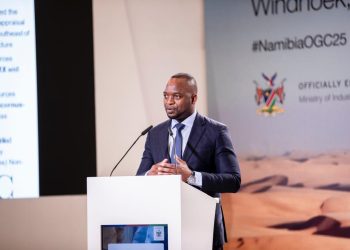
Botswana President Duma Boko said he and President Netumbo Nandi-Ndaitwah have agreed to intervene at the highest political level to push the project towards implementation.

“Between Botswana and Namibia, in relation to the Trans-Kalahari railway line, the President of Namibia and I have said and agreed, and now we have put our ministries and government officials under strict timelines,” Boko said.

“We want this project to start, and we are removing every obstacle and every bottleneck at the highest level.”

The planned 1,500-kilometre railway is expected to connect Botswana to Namibia’s Port of Walvis Bay, providing an alternative export route for Botswana’s mineral resources and strengthening regional access to Atlantic markets.

The project has struggled to move beyond planning since its inception more than a decade ago, largely due to funding constraints, difficulties securing suitable development partners and lengthy regulatory processes.

Boko acknowledged that major regional infrastructure projects have been slowed by environmental assessments, feasibility studies, financing requirements and other regulatory procedures, but said governments need to accelerate decision-making where possible.

The latest intervention follows moves announced last year by Namibia and Botswana to shift the project towards securing private-sector investment, finalising financing models and addressing regulatory and operational requirements.

The railway has taken on greater strategic importance as capacity constraints and delays within South Africa’s logistics network increase demand for alternative trade routes for regional exporters.

Boko said the railway forms part of a wider push to improve the movement of goods and people across Southern Africa and unlock intra-African trade.

He also called for greater investment in interoperable digital systems at border posts, warning that technology deployed by one country delivers limited benefits if neighbouring states operate incompatible systems.

“When you have technology on one side, it doesn’t immediately solve the problem because they must have technology on the other side, so that there is interoperability and communication between these two technologies,” he said.

Boko said Namibia, Botswana, South Africa, Zimbabwe and Zambia should develop compatible border technologies to reduce delays and make the movement of goods and people across the region more seamless.

“We can really achieve this if Namibia, South Africa, Botswana, Zimbabwe and Zambia come together and make it possible to have a kind of technology that makes it seamless to transport goods and persons across our borders,” he said.

The Trans-Kalahari Railway is also expected to support regional industrialisation and the African Continental Free Trade Area by lowering transport and transaction costs and improving access to markets for goods produced within Southern Africa.

The project is intended to support a broader shift away from exporting unprocessed raw materials by improving logistics for regional processing, manufacturing and mineral beneficiation.

Private and international investors have previously expressed interest in the railway, with Namibia and Botswana seeking a financing structure capable of moving the project from planning to construction.


author avatar
reporter
See Full Bio
Previous Post

Namibia pushes drought resilience as economic priority

Must Read

Chinese companies paid N$16.7 billion in Namibian taxes in 2024
Namibia

Chinese companies paid N$16.7 billion in Namibian taxes in 2024

September 8, 2025
Namibia urged to fast-track reforms to secure place as Africa’s next energy frontier
Namibia

Namibia urged to fast-track reforms to secure place as Africa’s next energy frontier

August 15, 2025
Namibia’s oil and gas reserves could generate N$7.7bn annually
Namibia

Namibia’s oil and gas reserves could generate N$7.7bn annually

August 13, 2025
Standard Bank posts N$556.9m six-month profit, up 10%
Namibia

Standard Bank posts N$556.9m six-month profit, up 10%

August 13, 2025
NamRA sees drop in illegal vehicle imports following moratorium
Namibia

NamRA plans digital system to track SME earnings and enforce compliance

August 13, 2025
Namibia targets state lottery launch within two years
Namibia

Namibia targets state lottery launch within two years

August 7, 2025
Load More

Related News

21st Centaury organisational learning and development at the backdrop of industrial-organisational psychology

Why organisational learning must deliver results, not attendance

February 4, 2026
Namibia attracts  N$115 billion FDI over 4 years

Namibia attracts N$115 billion FDI over 4 years

May 15, 2025
ReconAfrica secures ECC three-year extension

ReconAfrica secures ECC three-year extension

August 17, 2022

Browse by Category

  • Africa
  • Agriculture
  • Analysis
  • Business & Economy
  • Columnists
  • Companies
  • Finance
  • Finance
  • Fisheries
  • Green Hydrogen
  • Health
  • Investing
  • Latest
  • Market
  • Mining & Energy
  • namibia
  • Namibia
  • News
  • Opinions
  • Property
  • Retail
  • Technology
  • Tourism
  • Trade
The Brief | Namibia's Leading Business & Financial News

The Brief is Namibia's leading daily business, finance and economic news publication.

CATEGORIES

  • Business & Economy
  • Companies
    • Agriculture
    • Finance
    • Fisheries
    • Health
    • Property
    • Retail
    • Technology
    • Tourism
    • Trade
  • Finance
  • Green Hydrogen
  • Investing
  • Latest
  • Market
  • Mining & Energy
  • namibia
  • News
    • Africa
    • Namibia
  • Opinions
    • Analysis
    • Columnists

CONTACT US

Cell: +264814612969

Email: newsdesk@thebrief.com.na

© 2026 The Brief | All Rights Reserved. Namibian Business News, Current Affairs, Analysis and Commentary

Welcome Back!

Login to your account below

Forgotten Password?

Retrieve your password

Please enter your username or email address to reset your password.

Log In
No Result
View All Result
  • Home
  • Companies
  • Mining & Energy
  • Business & Economy
  • Opinions
    • Analysis
    • Columnists
  • Africa

© 2026 The Brief | All Rights Reserved. Namibian Business News, Current Affairs, Analysis and Commentary

This website uses cookies. By continuing to use this website you are giving consent to cookies being used. Visit our Privacy and Cookie Policy.