Friday, July 31, 2026
SUBSCRIBE
The Brief | Namibia's Leading Business & Financial News
  • Home
  • Companies
    • Finance
    • Agriculture
    • Technology
    • Property
    • Trade
    • Tourism
  • Business & Economy
  • E-PAPERreader
  • Mining & Energy
  • Opinions
    • Analysis
    • Columnists
  • Africa
No Result
View All Result
The Brief | Namibia's Leading Business & Financial News
  • Home
  • Companies
    • Finance
    • Agriculture
    • Technology
    • Property
    • Trade
    • Tourism
  • Business & Economy
  • E-PAPERreader
  • Mining & Energy
  • Opinions
    • Analysis
    • Columnists
  • Africa
No Result
View All Result
The Brief | Namibia's Leading Business & Financial News
Subscribe
No Result
View All Result
DSTV WC26 Campaign
Home Latest

More than food: Orchards as guardians of biodiversity

by reporter
July 28, 2026
in Latest
6
A A
Portrait of a smiling woman with dark hair and red tips, hands clasped under chin, wearing a pinstripe blazer and burgundy scarf against a light backdrop.

By Dr Hambeleleni Nguluve-Kandume

In Namibia, where dry conditions and climate variability pose ongoing challenges, orchards serve as crucial habitats for a wide array of plant and animal species.

Each tree acts as a mini-ecosystem, offering shelter, food, and breeding grounds for birds, insects, and small mammals.

Bees, for instance, play a critical role in pollinating not just our fruit trees but also wild plants in the surrounding environment, promoting plant diversity. This, in turn, supports healthy soil and water systems, creating a sustainable cycle of life.

As an orchard leader managing over 2,000 fruit trees, I have witnessed first-hand how planting trees goes far beyond the simple act of harvesting fruits.

Our orchards are significant ecosystems that support biodiversity, sustain the environment, and contribute to the well-being of our communities.

It is time we recognize that fruit trees are not just sources of food or income, they are essential guardians of the natural balance that sustains life on Earth. Supporting orchard farmers means supporting biodiversity.

When we buy locally grown fruits, we are encouraging farmers to maintain and expand these important ecosystems. Orchards act as corridors for wildlife, especially in regions where natural habitats are shrinking due to human activity.

By planting and preserving fruit trees, we help protect endangered species, promote genetic diversity, and maintain ecological balance.

Moreover, fruit trees contribute to combating climate change. Their roots help prevents soil erosion, increase groundwater recharge, and absorb carbon dioxide from the atmosphere.

In a region like Ohangwena, where climate impacts are increasingly felt, orchard trees provide a natural buffer against environmental stresses.

They help create microclimates that support other plant and animal life, promoting a strong environment overall. Supporting orchard farmers also means investing in sustainable livelihoods. Many farmers in Namibia rely on fruit farming for their income, and their work directly benefits biodiversity. Healthy orchards attract a variety of species, which in turn control pests naturally, reducing the need for harmful chemicals. This harmonious relationship between farming and nature not only ensures food security but also preserves the ecological integrity of our landscapes.

As an orchard leader, I believe our trees are more than just sources of income, they are symbols of hope and sustainability.

We have a responsibility to protect and expand these green spaces, not only for the current generation but for future Namibians. Encouraging more people to support local orchard farmers, buy fresh fruits, and plant more trees can make a significant difference.

In conclusion, planting and maintaining orchards is a powerful act of environmental stewardship.

It helps preserve biodiversity, supports climate stability, and sustains our communities. Let us all recognize that orchards are more than food, they are significant ecosystems that uphold the liveliness of our planet. Supporting our farmers and their orchards is supporting a sustainable, biodiverse future for Namibia and beyond.

*Dr. Hambeleleni Nguluve-Kandume is an orchard executive managing over 2,000 fruit trees and a dedicated advocate for sustainable biodiversity. She serves as a Board Member of the Namibian Organic Association (NOA) and is an accomplished researcher specializing in sustainable biodiversity finance. Dr. Nguluve-Kandume has published numerous journal articles on environmental sustainability and holds a Doctorate degree focused on innovative approaches to financing biodiversity conservation. Through her work, she champions the integration of ecological preservation with community development and economic advancement.


author avatar
reporter
See Full Bio
Previous Post

Rethinking performance metrics in diplomacy

Next Post

Govt shifts from planning to implementation of agri-food reforms

Must Read

Person using an ATM, inserting a card while holding a wallet nearby in a bank lobby
Latest

High banking costs keep many Namibians out of formal financial system

July 31, 2026
Professional man in a white shirt with a teal logo stands with arms crossed in a bright, modern office setting (logo reads 'DAURES GREEN HYDROGEN VILLAGE').
Latest

Mondjila appointed to lead Daures Green Hydrogen Village Phase 2

July 31, 2026
Namibia fuel prices set to drop in June
Latest

Fuel prices to rise by N$2.00 a litre as government restores levies

July 31, 2026
Namibia’s beef exports plunge nearly 50% in Q2
Latest

Namibia targets higher beef exports and value addition in livestock sector

July 31, 2026
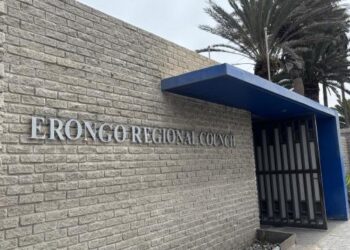
Erongo Regional Council sign on a beige brick wall with a blue canopy over a gated entrance along a sidewalk.
Latest

Erongo proposes reclamation plant to address water challenges

July 31, 2026
Professional headshot of a man in a dark suit and red tie against a white background.
Latest

NamPost appoints Willem Mouton as CEO

July 31, 2026
Load More

Related News

Erongo Desalination Plant supplies over 123 million cubic metres of water since 2010

Erongo Desalination Plant supplies over 123 million cubic metres of water since 2010

June 13, 2025
Windhoek approves 421 plans worth N$535.8m in Q1 

Windhoek approves 421 plans worth N$535.8m in Q1 

May 10, 2024
Namibia records N$33.4 billion trade deficit in 2021

Namibia records N$33.4 billion trade deficit in 2021

February 3, 2022

Browse by Category

  • Africa
  • Agriculture
  • Analysis
  • Business & Economy
  • Columnists
  • Companies
  • Finance
  • Finance
  • Fisheries
  • Green Hydrogen
  • Health
  • Investing
  • Latest
  • Market
  • Mining & Energy
  • namibia
  • Namibia
  • News
  • Opinions
  • Property
  • Retail
  • Technology
  • Tourism
  • Trade
The Brief | Namibia's Leading Business & Financial News

The Brief is Namibia's leading daily business, finance and economic news publication.

CATEGORIES

  • Business & Economy
  • Companies
    • Agriculture
    • Finance
    • Fisheries
    • Health
    • Property
    • Retail
    • Technology
    • Tourism
    • Trade
  • Finance
  • Green Hydrogen
  • Investing
  • Latest
  • Market
  • Mining & Energy
  • namibia
  • News
    • Africa
    • Namibia
  • Opinions
    • Analysis
    • Columnists

CONTACT US

Cell: +264814612969

Email: newsdesk@thebrief.com.na

© 2026 The Brief | All Rights Reserved. Namibian Business News, Current Affairs, Analysis and Commentary

Welcome Back!

Login to your account below

Forgotten Password?

Retrieve your password

Please enter your username or email address to reset your password.

Log In
No Result
View All Result
  • Home
  • Companies
  • Mining & Energy
  • Business & Economy
  • Opinions
    • Analysis
    • Columnists
  • Africa

© 2026 The Brief | All Rights Reserved. Namibian Business News, Current Affairs, Analysis and Commentary

This website uses cookies. By continuing to use this website you are giving consent to cookies being used. Visit our Privacy and Cookie Policy.