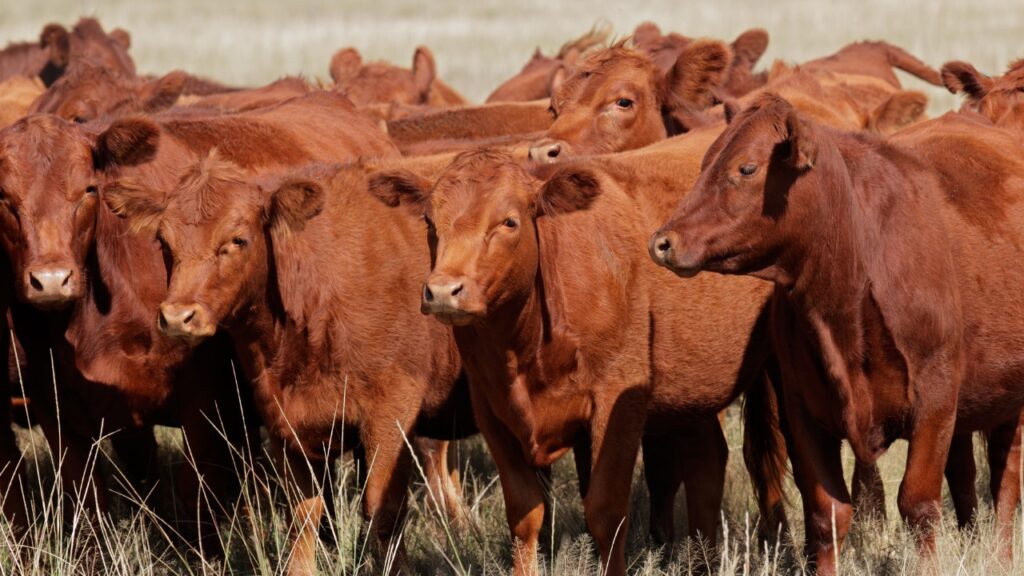
Cattle marketing increased by 34.4% year-on-year during the first quarter of 2026 as stronger demand from local, regional and international markets drove higher sales volumes and pushed beef prices higher, according to the Bank of Namibia’s (BoN) Quarterly Bulletin.
A total of 59,498 cattle were marketed during the quarter, representing a 23.4% increase from the previous quarter, with growth reflected in both slaughtering activity and live exports.
BoN said beef producer prices rose to N$72.97 per kilogram, up 12.0% year-on-year and 3.6% quarter-on-quarter, as demand for slaughter-ready cattle from farmers, abattoirs and export markets remained strong.
The central bank also reported that weaner prices climbed to N$32.52 per kilogram, increasing by 10.9% year-on-year and 3.4% quarter-on-quarter, supported by stronger auction demand.
Small stock marketing also recorded robust growth, with 232,712 head marketed during the quarter, representing increases of 64.6% year-on-year and 43.7% quarter-on-quarter.
“The increase in small stock activity was supported by higher slaughter volumes as abattoir throughput improved following herd rebuilding during 2025. Sheep producer prices increased by 3.0% year-on-year, although they declined by 3.9% quarter-on-quarter to N$63.94 per kilogram,” BoN said.
The central bank said the livestock sector’s performance reflected sustained demand for Namibian livestock, with higher marketing volumes recorded across both cattle and small stock categories.
Meanwhile, local crop production increased by 32.5% year-on-year to 2,171 tonnes, supported by improved rainfall and investment in irrigated farmland.
“Production of local crops stood at 2,171 tonnes in the quarter under review, increasing by 32.5% year-on-year on account of improved rainfall and investment in irrigated farmland, as reflected in white maize, wheat and pearl millet production. However, first-quarter output remained low relative to surrounding quarters due to seasonal factors,” BoN said.
Milk production, however, declined to 3.5 million litres, falling 9.8% year-on-year and 19.3% quarter-on-quarter due to unfavourable weather conditions.
“Milk production stood at 3.5 million litres in the first quarter of 2026, decreasing by 9.8% year-on-year and 19.3% quarter-on-quarter. The decline was attributed to unfavourable weather conditions that hindered milk production during the quarter under review,” the bank said.