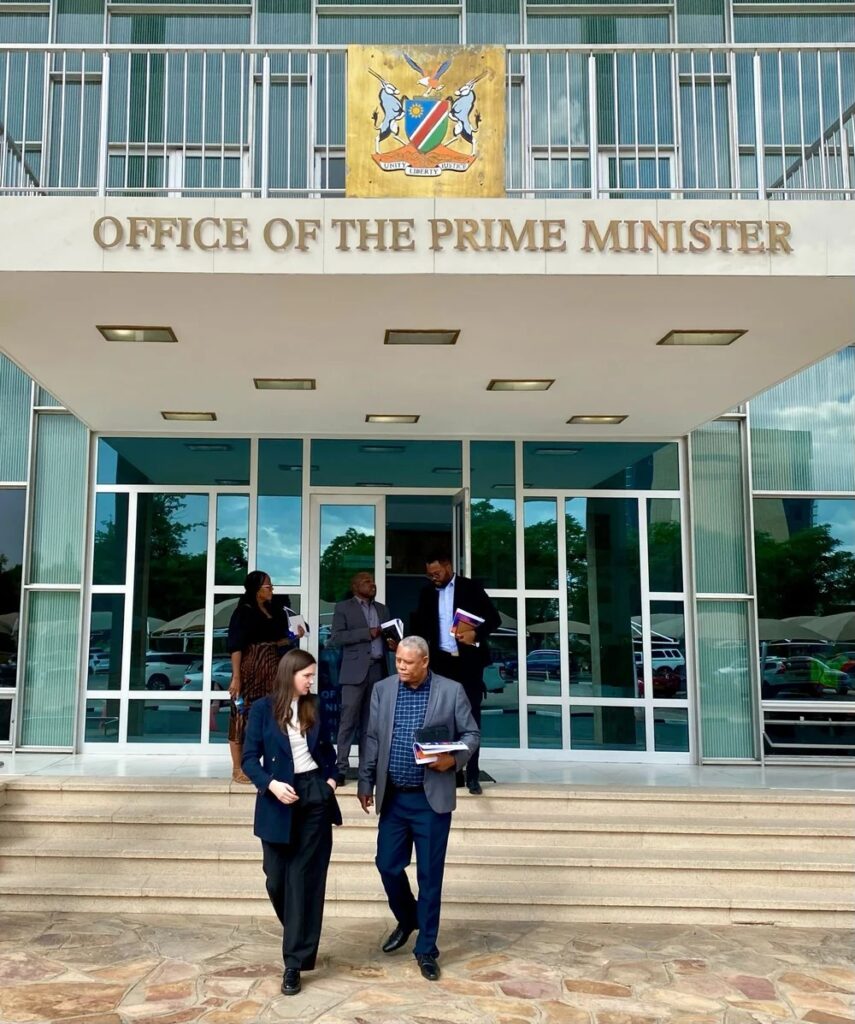
Low salaries are driving thousands of lower-grade civil servants into debt and forcing many to rely on micro-lenders and loan sharks to survive, Executive Director in the Office of the Prime Minister Shivute Indongo has warned.
Appearing before Parliament’s Standing Committee on Economy and Industry, Public Administration and Planning, Indongo said employees in Grades 15 to 18 are struggling to meet basic living costs, leaving them trapped in a cycle of borrowing and debt.
“These income levels are pitiful. Many employees in the lower grades simply cannot survive on their salaries, which forces them to rely on micro-lenders even for basic necessities,” he said.
Indongo warned that growing debt levels among public servants are becoming a serious concern, with many employees increasingly excluded from formal banking services because of poor credit records.
“Because they are over-indebted, formal banks will not assist them. They end up going to micro-lenders, asking for more money and more time and, in the process, they fall deeper into debt. Many are also turning to unregistered loan sharks,” he said.
The remarks come amid growing concern in Parliament over the rising debt burden carried by civil servants and the impact it is having on their financial wellbeing.
Committee Chairperson Ipumbu Shiimi questioned whether the government’s payroll deduction system may be contributing to the problem. The system allows micro-lenders to access deduction codes and recover loan repayments directly from salaries before employees receive their monthly pay.
Shiimi noted that while the arrangement was intended to simplify loan repayments, it may also be encouraging excessive borrowing among public servants.
The discussion comes as government undertakes major reforms to the Payment Deduction Management System (PDMS) following the termination of its contract with Avril Payroll Deduction Management Company. The Ministry of Finance is now bringing all payroll deduction operations fully under government control.
Indongo also called for the introduction of mandatory financial wellness monitoring for civil servants, arguing that government has a responsibility to monitor the financial health of employees who form part of the country’s administrative machinery.
“I don’t know why financial wellness has not been made mandatory in our country. I previously spent time in Botswana, and they have an explicit public policy there. They continuously monitor the financial stability of their public workers because these are the people running the state machinery,” he said.
“In our case, there is no one watching over the financial health of our staff; it is treated as a private matter. That needs to change.”
The warning highlights growing concern that financial distress among government employees is no longer merely a personal issue but an emerging public sector challenge.