The Global Water Partnership Organization says it aims to mobilise up to N$246 billion (US$15 billion) in global water investments from its new headquarters in Windhoek, as the intergovernmental organisation prepares to officially begin operations in Namibia later this month.
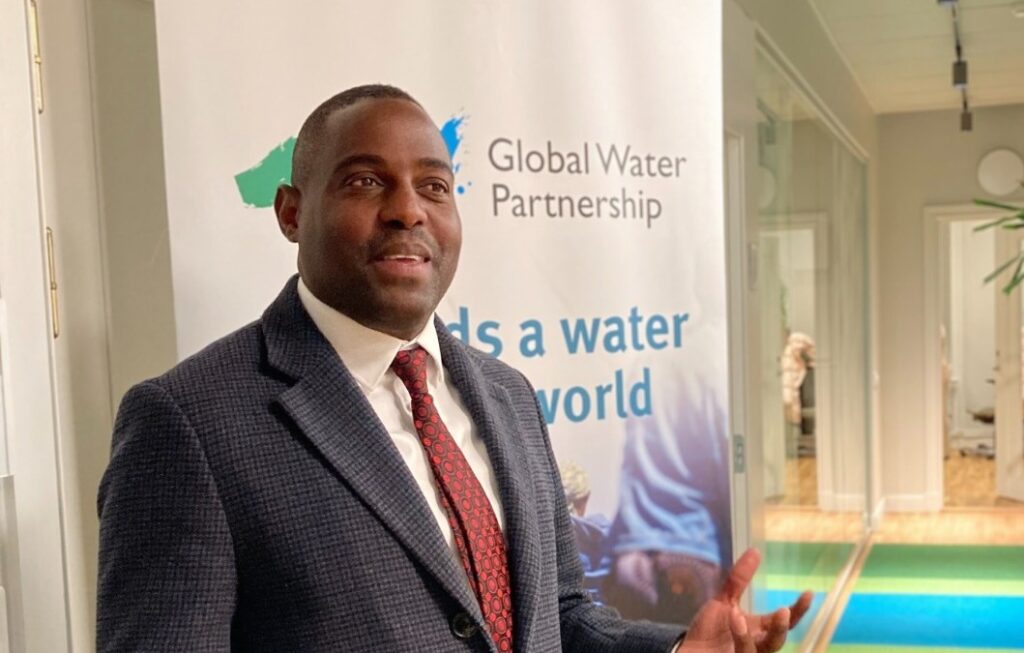
Speaking during a technical visit to finalise the relocation process from Stockholm, Sweden, GWP Chief Executive Officer Alex Simalawi said Namibia was selected to host the organisation’s headquarters because of its demonstrated leadership in water management, climate resilience and governance.
“As an organisation, under our 2025 to 2026 strategy, we aim to mobilise up to US$15 billion in water investments, and we are going to do that very closely in partnership with the government of Namibia and other countries,” he said.
The organisation, which was established in 1996 by the World Bank, the United Nations Development Programme and the Government of Sweden, focuses on supporting governments in addressing water challenges through Integrated Water Resources Management.
Simalawi said the decision to relocate the headquarters to the Global South reflects the growing urgency of water-related challenges such as droughts, floods and climate change impacts in developing countries.
He noted that the headquarters agreement was signed in Windhoek on 11 February this year, with operations expected to commence on 23 May.
“This is the first time that a global water organisation and intergovernmental institution will be hosted in the Global South, and Namibia has an opportunity to position itself as a global political and diplomatic capital for water investments,” he said.
Simalawi added that the organisation has already engaged several Namibian stakeholders, including the Ministry of Agriculture, Fisheries, Water and Land Reform, NamWater, the Environmental Investment Fund, the United Nations system and local universities.
According to him, GWP plans to strengthen partnerships aimed at mobilising investment, improving water access and supporting climate adaptation initiatives in Namibia and across Africa.
“We have a strategic partnership. We have agreed that we are going to establish a memorandum of understanding to define the areas of cooperation. Namibia has challenges, but Namibia also has solutions,” he said.
He said Namibia’s expertise in water-use efficiency and management has earned international recognition and should be showcased globally through GWP’s network, which spans more than 180 countries and nearly 3,000 institutional partners.
Simalawi further revealed that GWP intends to collaborate with Namibian institutions on research, youth development and capacity building, including partnerships with the Namibia University of Science and Technology.
The organisation believes establishing its headquarters in Namibia will not only elevate the country’s international standing but also help attract critical investment to address local water access challenges, with an estimated 200,000 to 500,000 Namibians still lacking access to clean water.