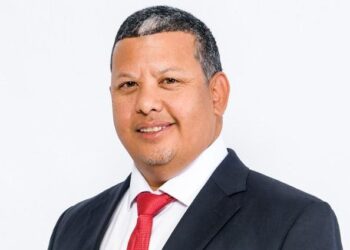
By Junias Erasmus
In life, we often face moments when opportunities seem out of reach. You apply for a job and receive no response.
You knock on a door, and it does not open. You send emails, attend interviews, and still walk away without success. Over time, it is easy to believe that the door is closed, and worse, that it is locked forever.
But here is a powerful truth: not every closed door is locked. Sometimes, the barrier is not as permanent as it appears. In many cases, the door remains closed because it is windy and sometimes remains closed because we have not tried the handle, knocked again, or explored another way in. What feels like rejection may simply be a delay, a redirection, or an invitation to approach things differently.
For many graduates and young professionals in Namibia, this message is especially important. The transition from education to employment can be challenging. After years of studying, there is an expectation that doors will open quickly. When they do not, discouragement sets in. However, a closed door does not always mean “no.” Sometimes, it means “not yet,” or “try again differently.”
Opportunities often require persistence. A single job application may not be enough. One interview does not define your future. Many successful individuals faced multiple rejections before finding their breakthrough. What set them apart was not luck, but resilience, the willingness to keep knocking, to keep trying, and to keep improving.
In some cases, the door remains closed because it is windy and dusty, and sometimes we are standing in the wrong place. We may focus only on one path, one company, or one type of job, while other opportunities exist around us. Being flexible and open-minded can reveal doors we never noticed before. This could mean exploring internships, volunteering, freelance work, or even starting something small on your own.
It is also important to reflect on personal readiness. Sometimes, the door does not open because we are not yet fully prepared. This is not failure, it is feedback. It is an opportunity to build skills, gain experience, and improve confidence. Instead of walking away, ask yourself: What can I do better next time? Growth often happens in these moments of reflection.
Equally, how you present yourself matters. A door may remain closed if your approach lacks professionalism or effort. Simple things, such as a well-prepared CV, clear communication, punctuality, and a positive attitude, can make the difference between an opportunity missed and an opportunity gained. In many cases, doors open for those who show seriousness, respect, and a willingness to learn.
Another important lesson is patience. Not every opportunity will come immediately. Some doors take time to open, and some require you to return more than once. Consistency builds trust. When people see your dedication and commitment over time, they begin to take notice.
At the same time, do not be afraid to create your own door. If opportunities are limited, think creatively. Identify needs in your community and find ways to solve them. Entrepreneurship, collaboration, and innovation can turn a closed door into a new entrance. You do not always have to wait for permission, you can take initiative.
It is also worth remembering that rejection is not always personal. Sometimes, decisions are influenced by factors beyond your control. What matters is how you respond. Do you give up, or do you grow stronger? Do you walk away, or do you try again with greater focus?
“Not every closed door is locked” is a reminder to remain hopeful and proactive. It challenges us to question our assumptions, to push beyond our comfort zones, and to believe that opportunities are still within reach.
When you encounter a closed door, do not immediately assume it is the end. Knock again. Try a different approach. Improve your skills. Adjust your mindset. And if necessary, find or create another door. Because often, the difference between those who succeed and those who give up is simple: one chose to try the handle, while the other walked away.
Junias Erasmus is an Interdisciplinary Scholar, Philosopher, and Legal Researcher, with recognised expertise in Artificial Intelligence grounded in a multidisciplinary foundation in Management Science. He is also a Motivational Speaker. This article is authored in his personal capacity. For enquiries, he may be contacted at Junias99@gmail.com.