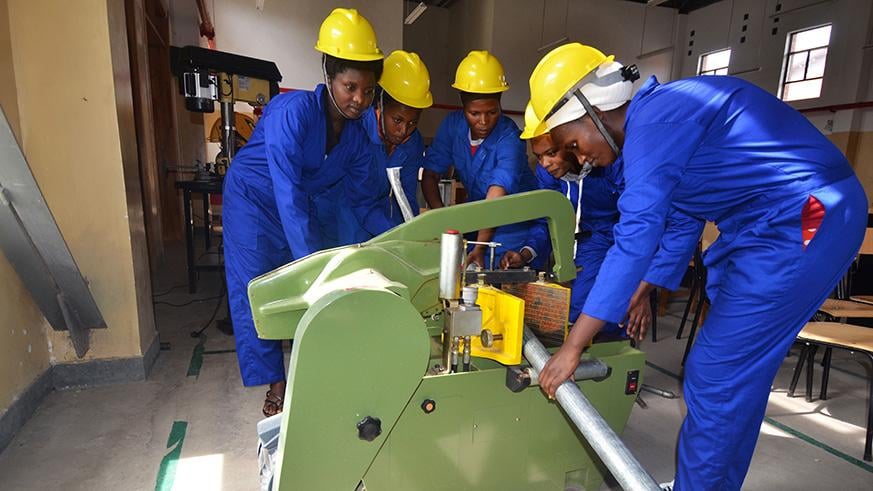
Namibia is set to review its Technical and Vocational Education and Training (TVET) policy as part of efforts to better align vocational training with labour market demands.
The Ministry of Education, Innovation, Youth, Sports, Arts and Culture said the review will be central to a new phase of the ProTVET programme, backed by €3.4 million and implemented in partnership with the Federal Republic of Germany through GIZ.
Director of TVET Dalia Mwiya said the initiative aims to strengthen the relevance of training programmes, expand access and improve pathways into employment.
“This next phase will focus on aligning training with the demands of a transforming economy by strengthening policy frameworks, expanding quality training opportunities and improving access for marginalised groups, including persons with disabilities,” she said.
The programme builds on more than a decade of cooperation and will prioritise reforms to policy and institutional frameworks, alongside efforts to increase private sector participation and scale up work-integrated learning.
Government said improving the link between training outcomes and industry requirements is key to addressing skills mismatches and supporting economic growth.
During the previous phase, reforms were introduced to governance structures for vocational training centres, while national frameworks were rolled out to modernise the system.
These included the launch of the National Work-Integrated Learning policy, the development of trainer standards and the introduction of an e-learning strategy.
Looking ahead, the ministry said implementation of the Work-Integrated Learning policy will be a priority in the current financial year, supported by awareness campaigns across all 14 regions.
“Of critical importance is the implementation of the WIL policy, which will serve as a cornerstone of our efforts this year,” Mwiya said.
Further priorities include developing standards for training providers and strengthening pathways from pre-vocational education into mainstream TVET, particularly for learners from marginalised groups.
The ministry said collaboration with programme partners will be essential to expand access to training and improve labour market integration.
Government added that training will be aligned with priority sectors of the economy, with a focus on higher-level qualifications between NQF levels 4 and 6.
The ProTVET programme is expected to support broader objectives around skills development, inclusion and workforce readiness as Namibia positions its training system to respond to evolving economic demands.