Namibia’s total government financing requirement, the amount the State must borrow to cover its budget deficit and maturing debt obligations, is projected to rise by 32% to N$19.2 billion in the 2026/27 financial year, up from N$14.5 billion in 2025/26.
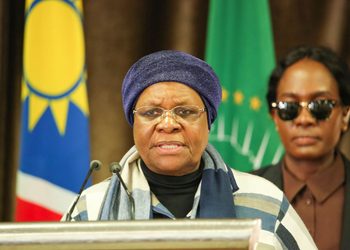
Finance Minister Ericah B. Shafudah told the National Assembly on Thursday that the financing requirement is expected to peak in 2026/27 before easing over the medium term as fiscal consolidation gains traction.
The requirement is projected to decline to N$12.9 billion in 2027/28 and further to N$10.6 billion in 2028/29, in line with a narrowing budget deficit from 5.5% of gross domestic product (GDP) to 3.3% over the Medium-Term Expenditure Framework period.
The projected increase follows a marginal rise in the gross financing requirement from N$14.4 billion in 2024/25 to N$14.5 billion in 2025/26.
“As of January 2026, total government debt stood at N$174.5 billion, equivalent to 65.2% of GDP. The debt portfolio is now 88% domestic and 12% foreign, reflecting a strategic shift towards domestic financing,” Shafudah said.
Total public debt is expected to increase further to N$217.3 billion by 2028/29, with domestic borrowing continuing to account for the majority of the portfolio.
Interest payments are also set to rise, increasing from N$14.3 billion in 2025/26 to N$16.2 billion in 2026/27. This will represent 18.1% of total revenue before stabilising at around 17.8% in subsequent years.
“These figures highlight the importance of effective debt management to reduce interest costs and support development priorities,” the Minister said.
While foreign debt remains moderate, government intends to maintain some external borrowing to diversify funding sources. At the same time, government guarantees supporting strategic investments are projected to rise from N$7.6 billion in 2025/26 to N$11.8 billion in 2026/27, equivalent to between 2.8% and 4.3% of GDP over the MTEF period.
To strengthen public debt oversight, Shafudah said the Ministry has begun implementing the Commonwealth Meridian debt management system to improve efficiency, transparency and reporting.
Government also plans to expand the use of blended finance, public-private partnerships and greater private sector participation to deliver major infrastructure projects while preserving fiscal space.
Operational expenditure for 2026/27 is estimated at N$81.3 billion, an increase of N$746 million from the revised preliminary outturn for 2025/26. The Minister said this was achieved through targeted cost management measures, which identified N$2.3 billion in savings across ministries and repurposed one-off expenditures towards priority projects.
Meanwhile, Namibia’s external buffers have come under pressure. The Bank of Namibia’s international reserves declined to N$51.6 billion at the end of December 2025, down from N$63.0 billion a year earlier.
“This decline was mainly due to foreign debt repayments by the Government, including the Eurobond redemption, along with lower SACU receipts and net ZAR outflows from banks, compounded by the strengthening of the NAD/ZAR against major currencies,” Shafudah said.
The rising financing requirement and higher interest burden underscore the delicate balance government faces between funding development priorities and maintaining debt sustainability as fiscal consolidation efforts continue.