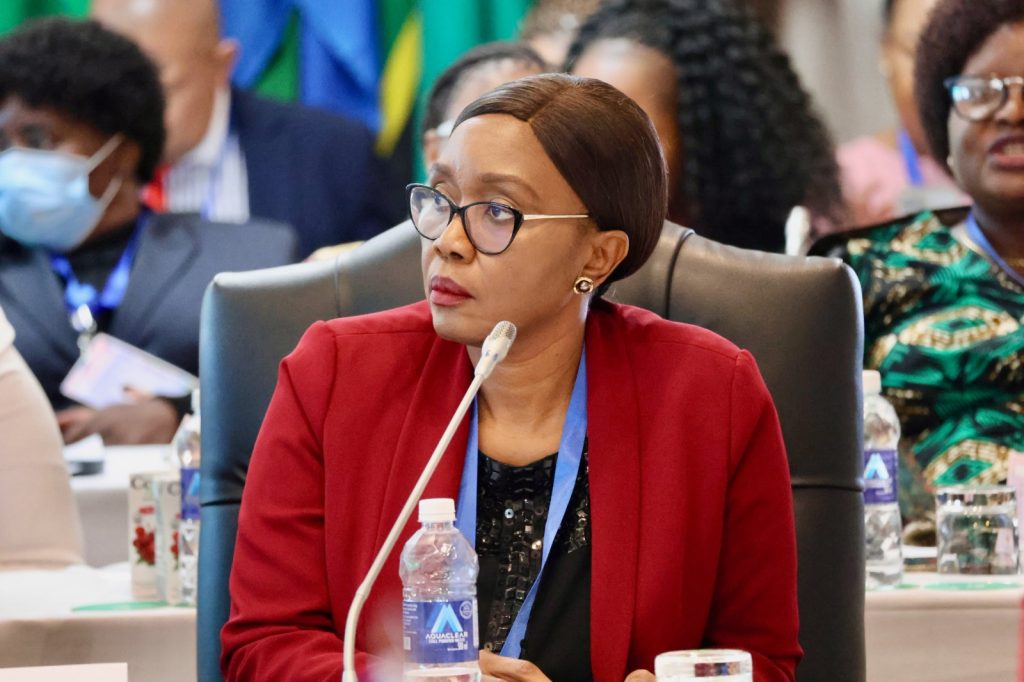
Speaker of the National Assembly Saara Kuugongelwa-Amadhila has called for increased transparency and accountability from civil society organisations, particularly in relation to their use of donor and public funds.
“We also note that there are some limitations. One of them is to say that because they are not elected, they cannot represent governments. And to the extent that donors, especially international donors, try to see them as an alternative to working with governments, that creates problems,” said Kuugongelwa-Amadhila.
Addressing an interactive debate with major stakeholders at the United Nations in Geneva, Kuugongelwa-Amadhila raised concern over the lack of financial audits among some civil society groups, noting this hampers government’s ability to partner with them effectively.
“Many of them are sometimes not audited, and it becomes difficult even for government to provide them subsidies where they cannot account for the public funds that governments are expected to account for to the public,” she said.
She stressed that while civil society plays a valuable role—particularly in mobilising resources and reaching remote communities—they must align with national priorities and be accountable in their operations.
“Sometimes their views do not really represent the views of the broader society. They introduce and advocate for things that are sometimes not embraced by communities and therefore result in tensions between the NGOs and certain segments of our communities,” she said.
Kuugongelwa-Amadhila said the government has adopted a formal policy framework for engaging with civil society and the private sector. This includes financial and institutional support mechanisms to involve them in delivering public services.
“This policy provides for the provision of subsidies, including cash subsidies, tax subsidies, and agency arrangements for private sector and civil society organisations to implement government programmes in order to provide much-needed services to our communities,” she said.
She further cautioned against the misuse of civil society as instruments for foreign agendas, stating that they should not replace or attempt to override democratically elected governments.
“They cannot hold government accountable, but they can work with communities to empower them through capacity-building so that they are more able to hold government accountable as the substantive sovereigns—the ones that are represented by elected leaders,” she said.
Despite these concerns, she affirmed Namibia’s commitment to strengthening partnerships with civil society and private sector actors. “For Namibia, we are ready to work with them, and we want our development partners to recognise the partnership we share and help us to strengthen this partnership for the best interests of Namibia,” she said