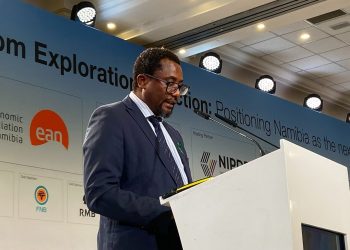
Namibia is developing a green hydrogen sector and is positioning itself as a significant player in this emerging market.
The Government’s strategy is to produce green hydrogen not only to help the world decarbonize but to kickstart a local green hydrogen economy, that will usher in a new transformative green and sustainable industrialisation pathway for economic development.
Vision 2030 commits Namibia to becoming an industrialised nation. What does that mean exactly? Industrialisation is defined as the process by which a country transforms itself from being a mainly primary sector driven economy into one based on manufacturing of goods. Agriculture, mining, fisheries are typical primary sector economic activity. Once tomatoes become tomato paste or tomato sauce, value is added.
When minerals undergo a process of crushing and grinding, concentration, refining, smelting and chemical processing, etc., the ore extracted from the earth gains value. This economic transformation is usually accompanied by a set of key changes that enable industrialisation, such as enhanced skills development and the availability of capital for investment from domestic and foreign sources.
Under a net-zero by 2050 scenario, global demand for green hydrogen and its derivatives is expected to rise. It is anticipated that there will be high international demand as numerous countries will be unable to meet their needs fully or cost-effectively through domestic production. These countries will rely on energy partnerships with countries that have more abundant renewable resources to close supply gaps at lower costs. This provides an opportunity for countries like Namibia to draw on our natural resource endowments such as wind and solar energy, that form the backbone to a competitive green industrial economy.
Early green hydrogen pilots and emerging local and foreign investment in green hydrogen are an early indication of private sector appetite for this new sector and a reflection of Namibia’s competitive advantage in green hydrogen production and industrialisation.
Namibia has substantial deposits of rare earth elements (REEs), Lithium and other critical raw minerals (CRMs) which are critical to the energy transition. We also have an abundance of invasive encroacher bush that we can unlock as a sustainable source of carbon, which, when combined with green hydrogen and other ingredients, could enable Namibia to manufacture low carbon synthetic fuels.
These resources, combined with access to world-class maritime transport corridors, provide Namibia with sturdy building blocks to become an industrialised nation. They also provide the opportunity of incubating impactful green industrialisation opportunities, that could generate significant socio-economic benefits.
Inspired by these building blocks, the Green Industrialisation Blueprint (GIB) identified and scoped priority pioneering or “first mover” projects. A shortlist of target industries that can spearhead the attraction of modern, value-adding and employment-generating industries was identified and refined by considering industry insights and additional regional benefits.
The risks and socio-economic opportunities for Namibia stemming from these opportunities were examined, including how the scaling of each major industry could impact the economy and jobs, including market demand to scale up local small and medium enterprises (SMEs) and joint ventures or other technology transfer opportunities. Key resource needs, including land, the need for specialised labour, and financing needs were also identified.
The GIB takes a deep dive into possible first mover green industries, which include value addition to minerals including Lithium and iron ore, flat glass production, synthetic fuel production, and components assembly and manufacturing for wind and solar energy production. The investment these first mover investable industries could potentially attract is estimated at USD40 billion.
To unlock such green industrialisation potential, enabling infrastructure to support regional and international connectivity is required. Such infrastructure enablers include railway upgrades, port expansion, power transmission lines, industrial park infrastructure and/or Special Economic Zones. The estimated value of these public investments that may be delivered through public-private partnerships and with the support of bilateral and multilateral donors is USD15 billion.
A key rationale for Namibia’s envisioned green industrialisation are the anticipated socio-economic benefits. Research conducted by McKinsey in conjunction with the Government, estimate that the full deployment of Namibia’s GIB could result in approximately 185,000 direct jobs from green hydrogen activities that include electrolyser assembly, wind and solar farm construction, and pipeline operation.
In addition, 70,000 jobs related to concrete manufacturing, basic metals manufacturing, and outsourced business services are estimated. This research further estimates that Namibia’s gross domestic product (GDP) could expand by 34% in real terms by 2030 (50% in 2040), compared to 2021.
The advancement of the GIB will require the coordinated engagement of a myriad of players both in the public and private sectors, including project owners, key equipment suppliers, off-takers, foreign governments, and various financing institutions.
Namibia is rich with potential yet to bring to life a “green industrial revolution”, the Namibian people will need to green their skills and rally behind this ambitious transformation of the economy. This way, a pathway towards the goals of Vision 2030 will then be charted.
The GIB was launched on the 03rd August 2024 and is accessible on the Namibia Green Hydrogen Programme (NGH2P) website at https://gh2namibia.com.
*Joseph Mukendwa is Head of Policy, Planning & Strategy at the Namibia Green Hydrogen Programme (NGH2P)