By Marlize Horn
Namibia’s social challenges are complex, interconnected and deeply rooted in the lived realities of communities.
They cannot be solved by goodwill alone, nor by fragmented interventions that respond only to visible needs.
If corporate social investment is to become a true catalyst for sustainable development, it must evolve from isolated acts of giving into coordinated, evidence-led and community-centred investment.
This is why the Capricorn Foundation responded positively to MTC’s call for collaboration through the Mukopano initiative, a platform that convenes funders, implementers and communities to coordinate social investment across Namibia.
For us, Mukopano represents more than an event. It is an opportunity to strengthen the way Namibia thinks about, coordinates and delivers social investment.
It creates space for corporates, foundations, government, non-governmental organisations and communities to move beyond parallel efforts and towards a more connected CSI ecosystem.
Collaboration is no longer optional
At the heart of effective CSI is a simple truth: no single organisation can solve Namibia’s development challenges alone.
The country’s national development agenda increasingly recognises the importance of inclusive growth, resilience, human development, environmental sustainability and effective partnerships.
The United Nations in Namibia also emphasises that the Sustainable Development Goals are interconnected and require partnerships to address economic and social inequalities, while Namibia’s Sixth National Development Plan highlights a whole-of-society approach to development.
For CSI practitioners, this means collaboration can no longer be treated as a desirable add-on. It must become a design principle. The government brings policy direction and an understanding of national priorities. NGOs and community organisations bring implementation experience and local insight. Businesses bring resources, networks, governance discipline and the ability to mobilise partnerships. Communities bring ownership, lived experience and knowledge of what will work in their context.
When these roles are aligned around shared outcomes, CSI becomes more than philanthropy. It becomes a mechanism for social progress, capable of reducing duplication, improving accountability and directing resources where they can have the greatest and most sustainable impact.
Closing the gap between intention and impact
Many CSI initiatives begin with good intentions. Yet, a gap can emerge when projects are designed from the boardroom rather than from the realities of communities. Funding often responds to urgent and visible needs, but sustainable change requires us to look more deeply into the root causes of vulnerability, inequality and exclusion.
Listening, research, local partnerships and community participation are therefore essential. Communities should not be viewed only as beneficiaries of social investment. They must be recognised as co-creators of the solutions that affect their lives. Their participation improves relevance, strengthens ownership and increases the likelihood that interventions will endure beyond the initial funding period.
For the Capricorn Foundation, this thinking underpins our shift from corporate social responsibility to corporate social investment. The distinction matters. Responsibility can imply obligation; investment requires discipline, focus and accountability. In practice, this means asking harder questions of every initiative. Does it build capacity? Does it strengthen self-sufficiency and resilience? Does it create pathways to employment or solve a problem in a way that can continue creating value over time?
This also requires a willingness to make choices. Namibia’s needs are significant, and not every worthy request can be supported. A disciplined decision-making framework helps ensure that resources are allocated fairly and strategically, while enabling deeper impact in areas where the Foundation can make a meaningful contribution.
From return on goodwill to return on impact
As requests for CSI funding increase, organisations must be clear about what guides their decisions. At the Capricorn Foundation, two considerations are especially important: strategic alignment and sustainable impact.
Strategic alignment means asking whether an initiative fits within the Foundation’s focus areas, including education and training, economic advancement, vulnerability, health and sustainability. In our current strategy, education and economic advancement receive particular emphasis because of their potential to unlock opportunity, dignity and long-term resilience. We also consider whether the initiative supports national development priorities and contributes to the Sustainable Development Goals most relevant to our work.
Sustainable impact means looking beyond immediate requests and evaluating whether a project has credible implementation capacity, responsible governance, measurable outcomes, and a realistic plan for continuity. Our focus is increasingly on return on impact rather than return on goodwill, as demonstrated by our investment in Meerkat Learning’s Teaching at the Right Level Programme. We specifically target learners in the Kunene Region from Grades 3 to 7. Success was measured by the percentage of children able to calculate, which rose from 60.9% to 88.4% among 1000 learners supported in 2025. In 2026, we expanded the programme to 1200 learners. The same impact-driven approach informs the Vocational Graduate Entrepreneurship Programme, a pilot initiative launched this year in the Erongo Region to support 20 selected TVET graduates through practical mentorship and business development support, helping them turn technical skills into viable enterprises and pathways to sustainable livelihoods. Importantly, the programme does not end with training; it also seeks to link graduates to established businesses and entrepreneurs for exposure and ongoing support as they build their ventures. The programme also plans to expand to other regions.
This is an important mindset shift for CSI in Namibia. Goodwill is valuable, but it is not enough on its own. If social investment is to be credible, it must demonstrate how resources translate into outcomes that matter: improved skills, stronger communities, better access to opportunity, greater resilience and more inclusive development.
Building a stronger CSI ecosystem
Platforms such as Mukopano can help Namibia move towards a more coordinated national approach to social investment. They create opportunities to share lessons, understand community needs more clearly, avoid duplication, identify partnership opportunities and align resources around priorities that matter.
The future of CSI should not be defined by how many projects are funded, but by how meaningfully those projects change lives and strengthen systems. This requires trust, clarity and shared accountability. It requires partners to engage earlier, co-design solutions, measure progress honestly and adapt when evidence shows that a different approach is needed.
For the Capricorn Foundation, the opportunity is clear. By combining purpose with evidence, compassion with accountability and resources with real community participation, CSI can become a stronger catalyst for sustainable development in Namibia. The challenge before us is not only to give more, but to invest better, collaborate more deliberately and build the kind of partnerships that enable communities to thrive long after the funding cycle has ended.
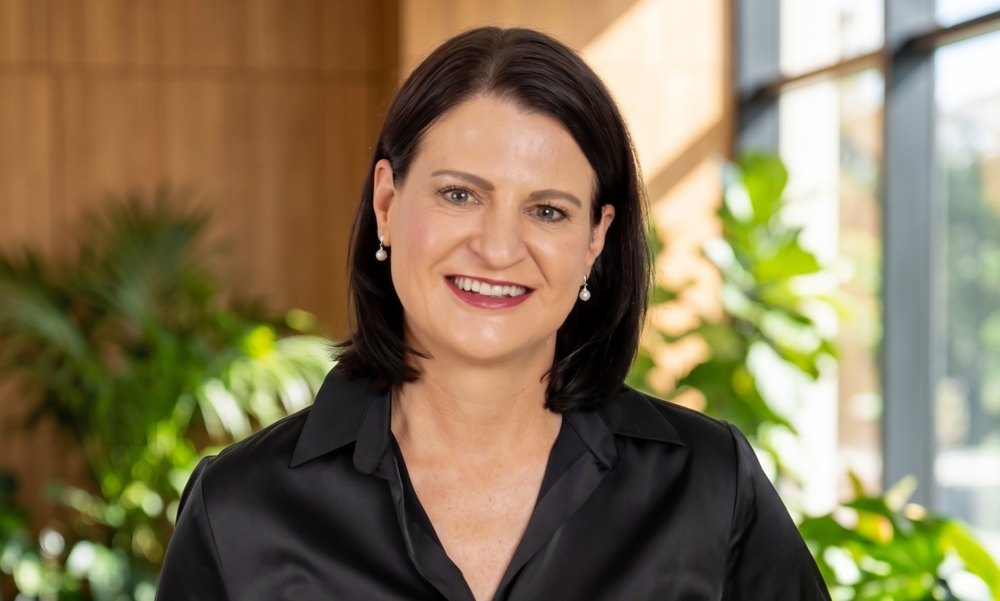
*Marlize Horn is the Group Chief Brand and Corporate Affairs Officer of Capricorn Group and the Executive Officer of the Capricorn Foundation. An accredited public relations practitioner (APR), she has led the group’s brand, communication, sponsorship and corporate social investment portfolios for more than two decades and played a central role in establishing the Capricorn Foundation in 2020. Through the Foundation, she champions a disciplined, partnership-driven approach to social investment focused on education, economic advancement and community resilience. She writes in her capacity as Executive Officer of the Capricorn Foundation.