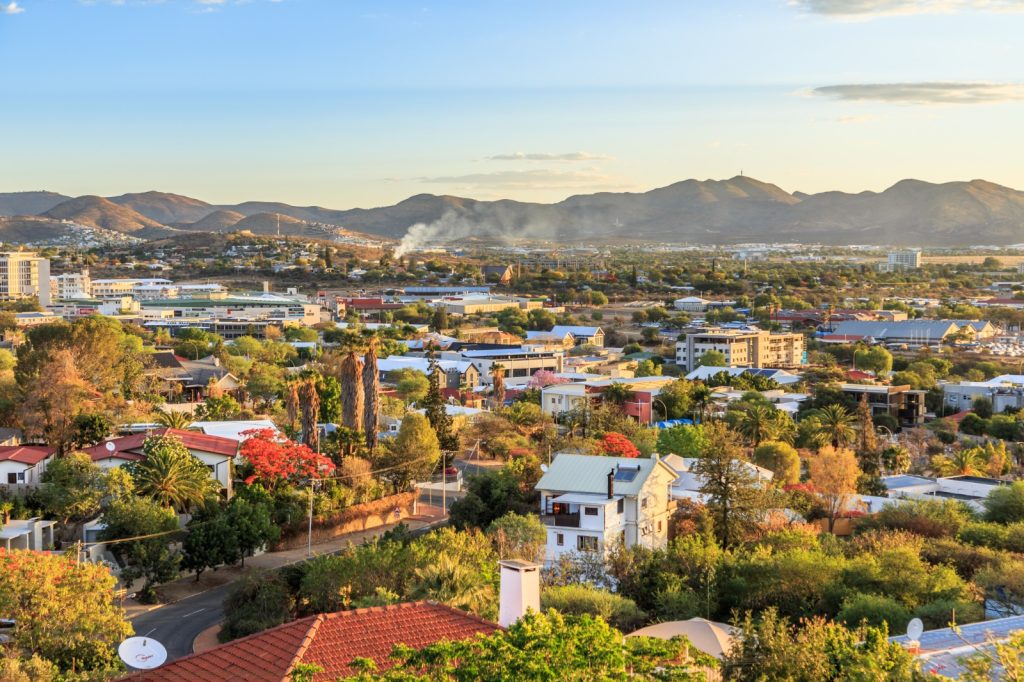
The City of Windhoek approved building plans worth N$135.1 million in May 2026, with Auasblick recording the highest-value residential developments as housing remained the main driver of construction activity, according to High Economic Intelligence (HEI).
HEI said 148 building plans were approved during the month. Although this was down from 207 approvals in April, the total value of approved developments increased by 20.4% from N$112.2 million, reflecting greater investment in higher-value projects.
Residential housing accounted for N$71.4 million across 28 approved houses, while additions and alterations totalled N$51.7 million from 105 approvals.
Commercial activity remained subdued at N$10.7 million across five projects, with no industrial or public sector developments approved.
“Approved building plans in May 2026 were predominantly driven by residential housing, which accounted for 53% of the total value of approvals, followed by additions and alterations at 38%. This composition underscores significant demand for new housing alongside continued household investment in property upgrades and extensions,” HEI said.
In terms of location, Auasblick led residential approvals with projects valued at N$21.0 million, followed by Klein Windhoek at N$13.7 million. Windhoek Central recorded the highest value of additions and alterations at N$20.1 million, as well as commercial developments worth N$6.0 million.
On the completion side, 21 buildings worth N$37.0 million were completed during May, compared with 16 buildings valued at N$23.2 million in the same month last year. Residential housing accounted for N$32.9 million of the completed value, while additions and alterations contributed N$4.2 million.
Windhoek Central recorded the highest value of completed residential projects at N$21.9 million across five houses. Other notable completions included one house in Kleine Kuppe valued at N$5.1 million and two houses in Academia worth N$4.9 million.
“The improvement in the value of completed buildings points to better execution of projects already in the pipeline, narrowing the gap between approvals and completions,” HEI said.
HEI said the construction sector continues to be supported by residential demand, although investment outside the housing market remains limited. The absence of industrial and public sector projects, together with modest commercial approvals, suggests fixed investment activity has yet to broaden.
“Construction activity is therefore expected to remain anchored by residential demand over the remainder of 2026, as approved housing projects progressively move into the execution phase. Nonetheless, a more durable and broad-based recovery in the sector will depend on a revival in commercial and public sector investment, alongside continued improvement in project execution capacity,” HEI said.