Friday, July 31, 2026
SUBSCRIBE
The Brief | Namibia's Leading Business & Financial News
  • Home
  • Companies
    • Finance
    • Agriculture
    • Technology
    • Property
    • Trade
    • Tourism
  • Business & Economy
  • E-PAPERreader
  • Mining & Energy
  • Opinions
    • Analysis
    • Columnists
  • Africa
No Result
View All Result
The Brief | Namibia's Leading Business & Financial News
  • Home
  • Companies
    • Finance
    • Agriculture
    • Technology
    • Property
    • Trade
    • Tourism
  • Business & Economy
  • E-PAPERreader
  • Mining & Energy
  • Opinions
    • Analysis
    • Columnists
  • Africa
No Result
View All Result
The Brief | Namibia's Leading Business & Financial News
Subscribe
No Result
View All Result
DSTV WC26 Campaign
Home Latest

About 70% of Namibians locked out of formal housing market as prices surge

by reporter
May 21, 2026
in Latest
14
A A

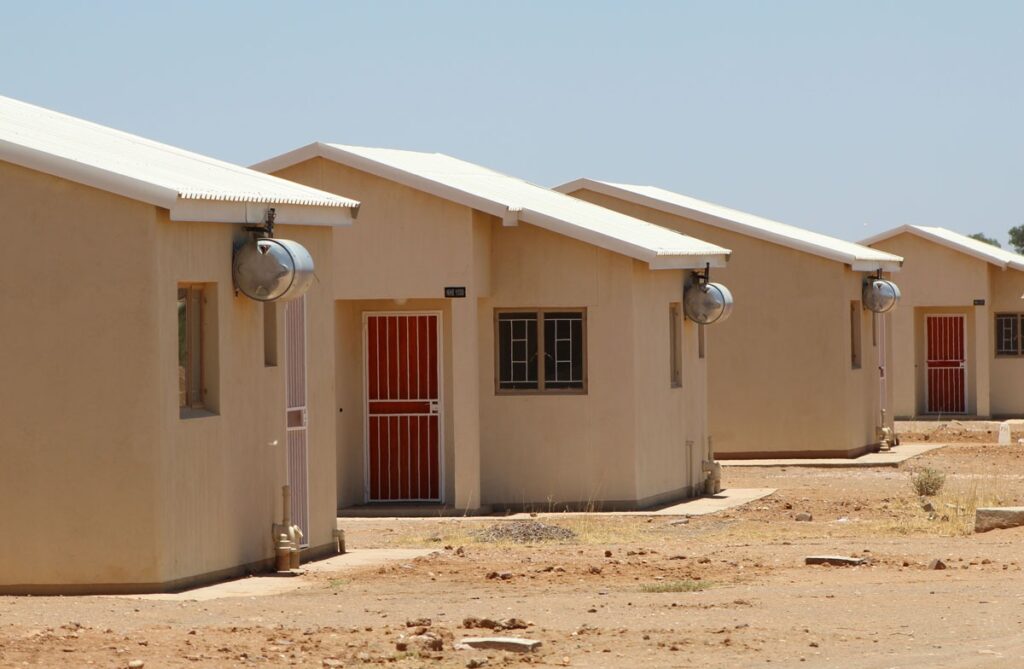
About 70% of Namibians can no longer afford formal housing as soaring property prices, weak income growth and limited access to mortgage finance continue to push home ownership beyond the reach of most households.

The warning emerged during a housing research seminar hosted by the Bank of Namibia, where policymakers, economists and banking executives painted a bleak picture of a housing market increasingly dominated by wealthier and cash-backed buyers.

Deputy Director of Policy Research at the central bank, Abigail Nainda, said Namibia’s housing backlog has exploded from around 80,000 households in 2007 to approximately 300,000 housing units by 2025, particularly affecting low and middle-income earners.

Nainda said average house prices have risen sharply over the past two decades, climbing from below N$200,000 in 2000 to around N$783,000 in 2010 before surging further to between N$1.3 million and N$1.4 million in recent years.

“Approximately 70% of the population cannot afford formal housing due to low incomes and limited mortgage access. That was the finding back then,” Nainda said.

The latest First National Bank Namibia Housing Index presented during the seminar showed that the national weighted average house price rose to approximately N$1.44 million during the first quarter of 2026.

Chief Executive Officer of Retail Banking at FNB Namibia, Mbo Luvindao, said affordability pressures have intensified as wages continue to lag behind property price growth.

According to FNB Namibia, about 75% of the country’s workforce earns less than N$5,000 per month, effectively excluding the majority of Namibians from the formal housing market.

“The data indicates that approximately 75% of Namibia’s workforce earned less than N$5,000 on a monthly basis. This basically places most Namibian households outside the formal housing market,” Luvindao said.

He said the market is increasingly being driven by equity-backed, cash-rich and foreign buyers, particularly in the central and coastal regions.

FNB Namibia data further showed that houses priced below N$500,000, which once accounted for more than 80% of registered mortgage bonds in 2007, now make up only about 25% of the market.

“The average value of small-segment houses now stands at around N$900,000, while medium-segment homes average N$2.1 million. Large-segment houses average N$4.4 million and luxury homes nearly N$8.7 million,” Luvindao said.

Governor of the Bank of Namibia, Ebson Uanguta, warned that formal home ownership is rapidly becoming unattainable for ordinary Namibians.

“The latest FNB Housing Index shows that the average house price in Windhoek has surpassed N$1.4 million, placing formal home ownership increasingly beyond the reach of many Namibians,” Uanguta said.

The affordability crisis is also pushing more households into the rental market, increasing pressure on already stretched urban housing systems.

Executive Director at the National Planning Commission, Sylvester Mbangu, said rapid urbanisation, rising construction costs and continued migration to towns and cities are worsening the crisis.

“Rapid urbanisation, rising construction costs, affordability constraints, and sustained migration to urban centres are placing increasing strain on housing delivery systems across the country,” Mbangu said.

Government aims to construct 55,000 houses and service 50,000 plots under the Sixth National Development Plan (NDP6), while reducing the proportion of households living in informal settlements from 28% to 14% by 2030.

author avatar
reporter
See Full Bio
Previous Post

Urbanisation and oil sector growth increase pressure on Namibia’s housing and infrastructure

Next Post

Which one would you rather have, connections or qualifications?

Must Read

Person using an ATM, inserting a card while holding a wallet nearby in a bank lobby
Latest

High banking costs keep many Namibians out of formal financial system

July 31, 2026
Professional man in a white shirt with a teal logo stands with arms crossed in a bright, modern office setting (logo reads 'DAURES GREEN HYDROGEN VILLAGE').
Latest

Mondjila appointed to lead Daures Green Hydrogen Village Phase 2

July 31, 2026
Namibia fuel prices set to drop in June
Latest

Fuel prices to rise by N$2.00 a litre as government restores levies

July 31, 2026
Namibia’s beef exports plunge nearly 50% in Q2
Latest

Namibia targets higher beef exports and value addition in livestock sector

July 31, 2026
Erongo Regional Council sign on a beige brick wall with a blue canopy over a gated entrance along a sidewalk.
Latest

Erongo proposes reclamation plant to address water challenges

July 31, 2026
Professional headshot of a man in a dark suit and red tie against a white background.
Latest

NamPost appoints Willem Mouton as CEO

July 31, 2026
Load More

Related News

We all have a strategy until we get punched in the mouth

We all have a strategy until we get punched in the mouth

March 17, 2025
NamPower gets 3.8% tariff increase, govt steps in with N$283m subsidy

NamPower gets 3.8% tariff increase, govt steps in with N$283m subsidy

May 13, 2025
Will oil, Green Hydrogen provide the boon for the South

Will oil, Green Hydrogen provide the boon for the South

April 1, 2022

Browse by Category

  • Africa
  • Agriculture
  • Analysis
  • Business & Economy
  • Columnists
  • Companies
  • Finance
  • Finance
  • Fisheries
  • Green Hydrogen
  • Health
  • Investing
  • Latest
  • Market
  • Mining & Energy
  • Namibia
  • namibia
  • News
  • Opinions
  • Property
  • Retail
  • Technology
  • Tourism
  • Trade
The Brief | Namibia's Leading Business & Financial News

The Brief is Namibia's leading daily business, finance and economic news publication.

CATEGORIES

  • Business & Economy
  • Companies
    • Agriculture
    • Finance
    • Fisheries
    • Health
    • Property
    • Retail
    • Technology
    • Tourism
    • Trade
  • Finance
  • Green Hydrogen
  • Investing
  • Latest
  • Market
  • Mining & Energy
  • namibia
  • News
    • Africa
    • Namibia
  • Opinions
    • Analysis
    • Columnists

CONTACT US

Cell: +264814612969

Email: newsdesk@thebrief.com.na

© 2026 The Brief | All Rights Reserved. Namibian Business News, Current Affairs, Analysis and Commentary

Welcome Back!

Login to your account below

Forgotten Password?

Retrieve your password

Please enter your username or email address to reset your password.

Log In
No Result
View All Result
  • Home
  • Companies
  • Mining & Energy
  • Business & Economy
  • Opinions
    • Analysis
    • Columnists
  • Africa

© 2026 The Brief | All Rights Reserved. Namibian Business News, Current Affairs, Analysis and Commentary

This website uses cookies. By continuing to use this website you are giving consent to cookies being used. Visit our Privacy and Cookie Policy.