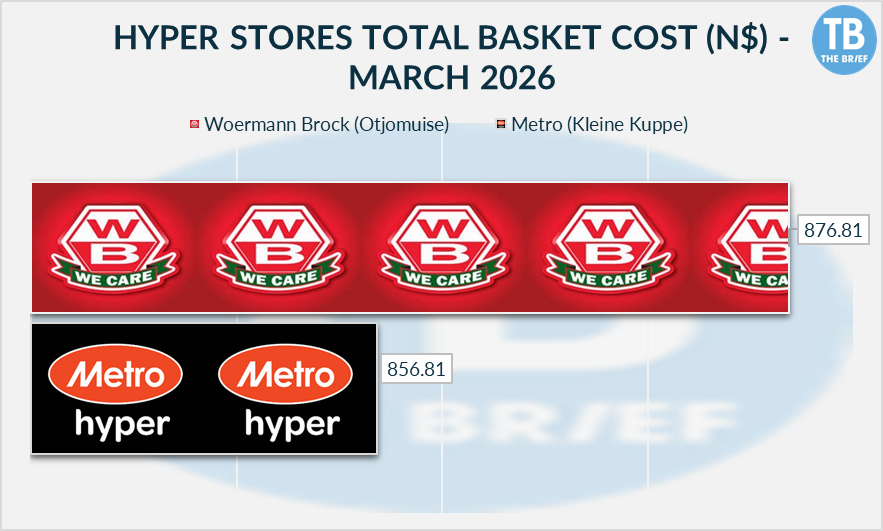
Metro emerged as the more affordable hyper store in March 2026, with a total basket cost of N$856.81 compared to N$876.81 at Woermann Brock (Otjomuise). This reflects a modest price difference of N$20.00, not a significant gap, but enough to give Metro a slight edge, with prices between the two stores remaining fairly close overall.
While Metro was cheaper overall, Woermann Brock’s slightly higher basket cost was mainly driven by higher prices across several staple items.
Key Observations
1. Staples and Core Food Items
Metro offered more competitive pricing across key staple goods:
- Maize meal (5kg): Cheaper at Metro (N$61.99 vs N$67.99)
- Cooking oil (2L): Lower at Metro by N$5.00
- Rice (2kg) and milk (1L): Both cheaper at Metro
- Prices for white sugar were identical at both retailers
2. Protein and Fresh Produce
- Chicken (1.5kg) and eggs (18 medium) were both more affordable at Metro, with eggs showing a difference of N$10.00.
- Fresh produce (onions, potatoes) followed a similar trend, with Metro slightly cheaper.
- Tomatoes were the only fresh item cheaper at Woermann Brock.
3. Household and Cleaning Products
Metro generally maintained lower prices across household essentials:
- Washing powder, dishwashing liquid, toothpaste, and soap were all cheaper at Metro.
- However, toilet paper (Twinsaver 9 rolls) stood out as significantly cheaper at Woermann Brock (N$109.99 vs N$139.99), partially offsetting Metro’s overall advantage.
4. Packaged and Processed Foods
- Items such as macaroni pasta, tomato sauce, and butter were a bit cheaper at Metro.
- Price differences in this category were relatively small, suggesting strong competition between retailers.
Conclusion & Consumer Takeaway
The March 2026 basket analysis highlights Metro (Kleine Kuppe) as the most cost-effective hyper store overall, offering lower prices across the majority of essential goods. While Woermann Brock (Otjomuise) remains competitive, particularly in selected items like toilet paper and fresh tomatoes, its higher pricing on key staples and proteins contributed to a slightly more expensive basket.
Consumers may benefit from selective shopping across stores, particularly for high-value items where price differences are more pronounced.