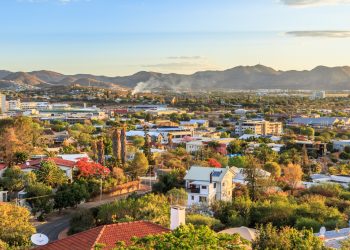
The value of approved building plans in Windhoek reached N$1.7 billion by June 2025, almost double the N$903 million recorded in the first half (1H) of 2024.
According to Simonis Storm junior economist Almandro Jansen, this performance suggests strong investment appetite in the early part of the year, particularly in large-scale commercial and mixed-use developments.
This comes as in Windhoek, the total value of approvals fell by 27% month-on-month to N$131 million in June, down from N$178 million in May. While this decline is significant, it comes off a strong base.
“On a quarterly basis, however, the slowdown is more pronounced. The value of building plans approved in Windhoek dropped from N$1.2 billion in Q1 2025 to just N$455 million in Q2,” said Jansen.
He added that whether this marks the beginning of a more cautious cycle or simply reflects project timing remains to be seen, but it will be important to track over the coming months.
In Swakopmund, June saw a rebound in project value, with approvals rising to N$49 million, up nearly 22% from the N$26 million recorded in May.
“Nonetheless, the year-to-date total remains subdued at N$359 million, significantly lower than the N$2.3 billion registered over the same period in 2024. It’s worth noting that the high base last year was inflated by a few large, once-off projects, and as such, this year’s figures reflect a more normalized pipeline,” Jansen added.
Building activity across both Windhoek and Swakopmund remains overwhelmingly residential in nature, reinforcing the persistent demand for housing, albeit at a smaller scale.
In Windhoek, residential additions dominated the construction landscape in June 2025, accounting for 73% of total building approvals (115 out of 158 projects).
“This was followed by new housing developments at 10% (23 projects), boundary walls at 7.5% (12 projects), and commercial developments at just 4%. Most of the activity was concentrated in suburbs like Khomasdal, Katutura, and Klein Windhoek, areas that continue to absorb steady demand for incremental housing improvements and densification,” Jansen said.
He noted that this pattern points to a housing market that is active but heavily driven by low- to mid-scale expansions, rather than large-scale developments.
The number of buildings completed in Windhoek by June 2025 totalled 223, which is significantly down from 577 during the same period in 2024. However, the value of completed projects rose to N$441 million, up from N$319 million in 2024.
“This shift suggests a clear pivot toward smaller-scale, higher-value projects, particularly residential upgrades, densification units, and possibly boutique commercial builds rather than the broader volume of completions seen in previous years,” Jansen said.
Quarterly performance, however, indicates some cooling. The value of buildings completed in Q2 2025 came in at just N$104 million (from 126 projects), compared to N$336 million in Q1 from only 97 projects.
“This sharp decline in total value despite a higher number of completions reinforces the view that developers may be scaling back project scope or shifting toward more cost-conscious designs,” Jansen said.